Balancing Beauty and Function: Smart Finishing Touches and Pool Landscaping Investments
Your dream pool is more than just a place to swim—it's a carefully balanced ecosystem where beauty and functionality work together seamlessly. From hardscaping elements and strategic plantings to thoughtful shade solutions, lighting design, water features, privacy screens, and practical maintenance considerations, every decision contributes to creating an outdoor space that enhances your lifestyle.
The most successful pool environments strike that perfect balance between stunning aesthetics and practical usability. They incorporate materials that withstand pool chemicals while looking beautiful, feature plants that create ambiance without excessive maintenance, and include amenities that provide both visual impact and everyday enjoyment. When properly executed by experienced professionals, these finishing touches transform your backyard from a simple swimming area into a comprehensive outdoor living space that provides years of enjoyment while adding significant value to your property.
At Designer Custom Pools, our 48 years of experience have taught us that thoughtful integration of these elements—not just their individual implementation creates truly exceptional pool environments that families love for generations.
The Impact of Pool Landscaping

When I walk onto a property with a newly installed pool that has no landscaping, it reminds me of seeing a beautiful painting without a frame. Sure, the pool itself is impressive—the sparkling water, the clean lines, the promise of refreshing swims on hot summer days. But something crucial is missing.
After years of building custom pools, I've seen firsthand how the right landscaping transforms a simple swimming pool into the centerpiece of an outdoor sanctuary. It's what I call the "wow factor," and it's the difference between a backyard that's merely functional and one that takes your breath away.
Beyond Aesthetics: The True Value of Pool Landscaping
Let me share something most pool contractors won't tell you upfront: landscaping isn't just about making your pool pretty. When done thoughtfully, it's a strategic investment that pays dividends in multiple ways:
- Property Value Enhancement: Numbers don't lie. According to recent real estate analyses, a well-designed pool with professional landscaping can increase your property value by 7-15% compared to a standalone pool. That's potentially tens of thousands of dollars in added value.
- Unified Outdoor Living: Your pool shouldn't feel like an island in your backyard. Proper landscaping creates a seamless flow between your home, pool, and surrounding spaces. It's about creating rooms without walls—outdoor living spaces that feel like natural extensions of your home.
- Environmental Benefits: Strategic plant placement can provide natural cooling, reduce evaporation, filter pollutants, and even minimize chemical usage in your pool over time.
The Psychology of Pool Spaces
I remember working with the client in Lakeside Hills. They had invested in a gorgeous geometric pool but felt something was missing after installation. "It feels cold, clinical," Mrs. Thompson explained during our consultation.
Three months after we completed their landscaping—adding curved plant beds to soften the angles, strategic privacy screens using ornamental grasses, and a small meditation garden adjacent to the pool she called me. "We use our outdoor space twice as much now," she said. "It doesn't just look better; it feels better."
This psychological component is something I've observed consistently throughout my career. Well-designed pool landscaping doesn't just improve aesthetics it fundamentally changes how you experience your outdoor space.
From Afterthought to Essential
Too often, homeowners exhaust their budget on the pool itself, treating landscaping as an afterthought. This approach typically leads to disappointment and additional expenses down the road.

The most successful projects I've been involved with integrated landscaping considerations from day one. When you plan your pool and its surroundings as a single cohesive project, you create harmony that simply can't be achieved through separate, disconnected efforts. Whether you're dreaming of a tranquil retreat or an entertainment hotspot, remember that your pool is just one element in your outdoor living experience. The landscaping that frames it will ultimately determine whether your investment merely meets expectations—or exceeds them entirely.
Hardscaping Elements

If your swimming pool is the star of your backyard show, think of hardscaping as the supporting cast that makes everything work. After designing and building hundreds of custom pools over the years, I've learned that the materials surrounding your pool often determine whether your outdoor space feels like a cohesive retreat or just a hole with water.
Selecting the Right Materials
I still remember visiting a client's home a year after installation. They'd opted for the cheapest concrete option around their pool, against my gentle recommendations. they sighed, "you were right. It's cracked, it's hot on our feet, and it looks... well, cheap."
Here's what I recommend considering:
- Natural Stone: Limestone, travertine, and bluestone offer timeless appeal with excellent heat resistance. Yes, they're an investment, but they age beautifully and rarely need replacement. I've installed travertine decks that look better after 10 years than concrete does after two.
- Pavers: Offering excellent versatility in patterns and colors, concrete pavers provide a middle ground between poured concrete and natural stone. Their individual units allow for some ground movement without cracking—perfect for areas with freeze-thaw cycles.
- Composite Decking: For clients seeking a warmer, more organic look, modern composite materials offer wood's aesthetic appeal without the maintenance headaches. They've come a long way in UV resistance too.
- Concrete: Don't dismiss concrete outright. When properly installed with decorative stamping, staining, or aggregate finishes, it can provide stunning results at a lower price point. The key is proper installation with adequate control joints.
Creating Functional Zones
Your pool area isn't just one space it's several microenvironments serving different purposes. I always ask clients to envision how they'll use their space:
- Lounging Areas: Consider a slightly raised platform with different materials to create a visual "room" for chaise lounges.
- Dining Spaces: If you'll be eating poolside, consider a flat, stable surface with room for chairs to slide without falling off edges.
- Conversation Pits: Some of my favorite projects include slightly sunken areas with built-in seating around a fire feature—perfect for evening gatherings.
- Walkways: These transitional elements should guide movement naturally between spaces. I often use a different material or pattern to subconsciously direct traffic.
Material Performance Considerations
Pool environments are demanding. Your hardscaping must withstand:
- Constant moisture and pool chemicals
- Extreme temperature fluctuations
- Heavy foot traffic
- Potential slip hazards
I've seen beautiful imported tiles that became dangerously slippery when wet, and dark materials that became too hot to walk on barefoot in July. Always evaluate materials not just for their look, but for their performance in a pool setting.
The most successful pool projects I've completed integrate hardscaping that balances aesthetics, function, safety, and durability. When done right, these elements create an outdoor space that feels intentional, cohesive, and uniquely yours—while standing up to the unique demands of poolside living.
Softscaping Around Your Pool

I've spent over two decades building custom pools, and if there's one mistake I see homeowners make repeatedly, it's underestimating the impact of plants around their pools. Let me tell you softscaping isn't just the cherry on top; it's what brings your entire pool area to life.
The Evergreen vs. Deciduous Debate
Early in my career, I installed a gorgeous pool for a neurosurgeon and his family. They insisted on keeping the magnificent maple trees overhanging their proposed pool location. "They provide such beautiful shade," they argued. By October of that first year, they were calling me daily, frustrated with the constant leaf cleanup and clogged filters.

Unlock Your Dream Oasis with Trusted Pool Contractor Los Angeles: evergreens are your pool's best friends. They provide year-round privacy, consistent shade, and most importantly they won't dump their entire foliage collection into your water every autumn.
Consider:
- Italian Cypress for vertical interest and privacy screening
- Dwarf Alberta Spruce for compact, low-maintenance structure
- Boxwoods for formal, shapeable hedging
- Juniper varieties for ground cover on slopes
If you absolutely must have deciduous trees (those that drop leaves), keep them at least 15-20 feet from the pool's edge.
The Magic of Pest-Repellent Plantings
One of my favorite client stories involves a family that was about to abandon their evening swimming ritual because of mosquitoes. Instead of resorting to chemical warfare, we created what I call a "defensive perimeter" of pest-repellent plants.
Strategic plantings of lavender, rosemary, mint, and marigolds around their pool deck didn't just solve their bug problem—they created a sensory experience of gentle fragrances that enhanced their outdoor enjoyment immensely.
These aromatic plants serve double-duty: they naturally repel insects while adding beautiful textures and colors to your landscape. As a bonus, you can snip fresh herbs for, your summer cocktails poolside!
Strategic Placement for Beauty and Function
Your pool landscaping should consider these critical factors:
- Root Systems: That adorable little tree can become a pool liner's worst enemy once its roots expand. I always recommend maintaining at least 8-10 feet between significant plantings and your pool structure.
- Debris Management: Position plants where prevailing winds won't consistently blow debris into your pool. This simple consideration can save hours of maintenance.
- Visual Layering: Create depth by layering plants of various heights—ground covers, medium shrubs, and taller structural elements—to frame views and create interest from multiple angles.
- Seasonal Interest: Even in colder climates, your pool area should remain visually appealing during off-seasons. Consider plants with winter interest like ornamental grasses, evergreens with interesting bark, or shrubs with colorful winter berries.
When done thoughtfully, softscaping doesn't just enhance your pool aesthetically—it creates a microclimate that can make your outdoor experience more comfortable, extend your swimming season, and significantly reduce maintenance demands. The right plants, properly placed, transform your pool from a simple water feature into a true backyard ecosystem.
Shade Solutions and Structures
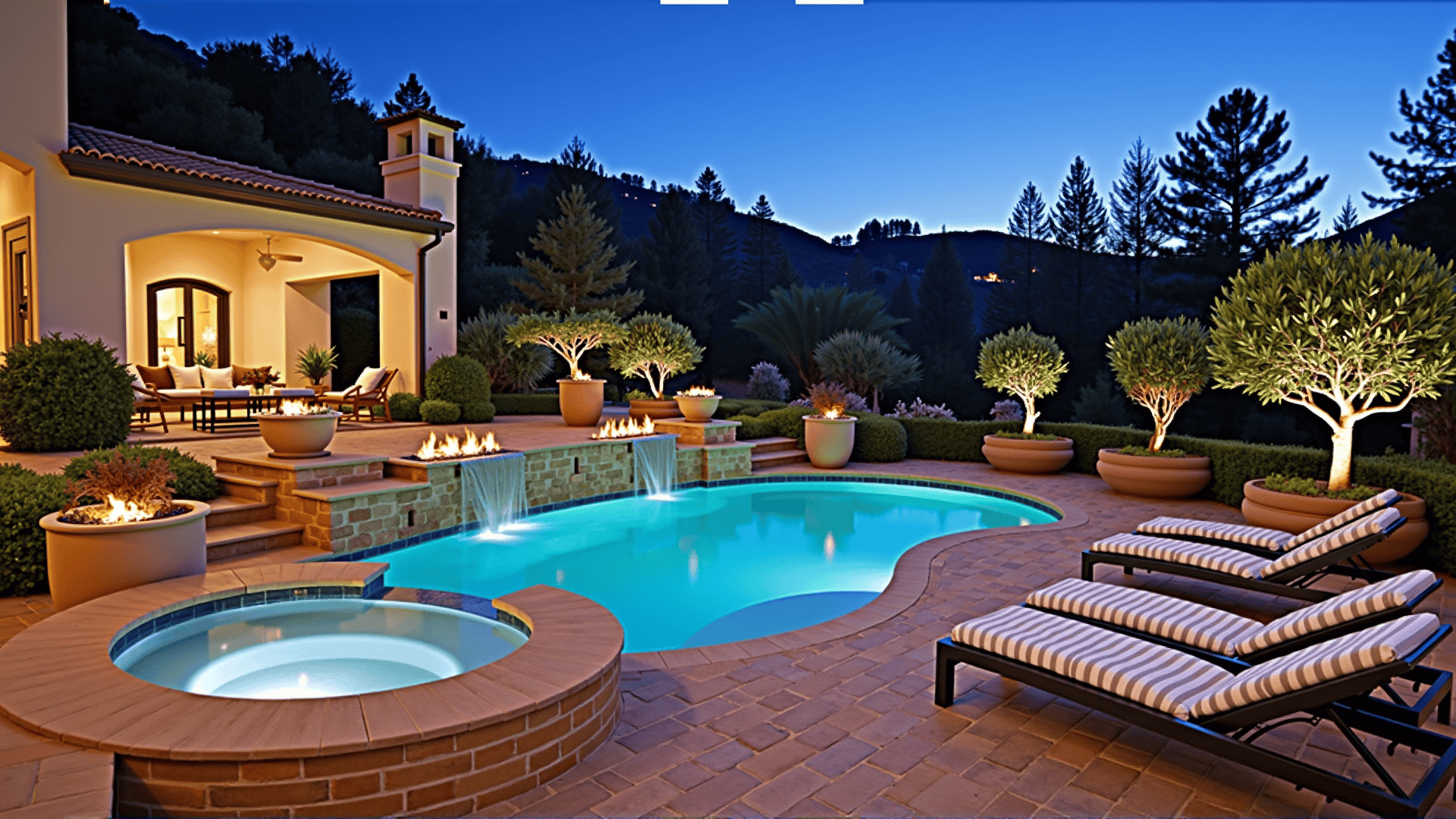
After years of building custom pools, I've learned that on a 95-degree summer day, shade isn't a luxury it's a necessity. I'll never forget the client, who called me frantically two weeks after their pool installation. "We can't use our beautiful new pool during the day," Mrs. Richardson explained. "It's like sitting in a reflective cooking pan out there!"
Without proper shade planning, your pool paradise can quickly become unusable during peak daylight hours. Let's explore how to keep your outdoor oasis comfortable year-round.
Permanent Structures: Investing in Comfort

Pergolas have become my go-to recommendation for many clients. These semi-open structures provide filtered light while maintaining airflow. Modern options include adjustable louvers that can open fully on cooler days or close completely during rain showers. I recently completed a cedar pergola with a retractable canopy system for a tech executive in Westlake—it transformed their pool area into a three-season living space.
Gazebos offer more substantial protection and create a true outdoor room adjacent to your pool. They're perfect for housing outdoor kitchens, dining areas, or lounge spaces. One of my favorite projects involved a hexagonal gazebo that served as both a poolside bar and a changing room—dual functionality that maximized the client's investment.
Cabanas bring a resort feel to residential pools. These can range from simple canvas structures to elaborate mini-buildings with changing areas, bathrooms, and storage. For families with younger children, cabanas provide a shaded retreat for afternoon naps or reading breaks between swimming sessions.
Natural Shade Solutions
While built structures offer immediate results, strategic landscaping provides beauty and shade that improves with time. The trick is balancing shade needs with practical pool maintenance.
I always remind clients that deciduous trees (those that lose leaves seasonally) provide perfect seasonal adaptation—shade during summer when you need it, and allowing sunshine to warm your pool area during cooler months when leaves have fallen. However, position them thoughtfully to minimize debris in your pool!
For a physician's family in Oak Park, we installed a row of clumping bamboo along the western exposure of their pool. This created a beautiful natural privacy screen that also protected their pool area from the harsh afternoon sun. The gentle rustling of bamboo leaves now provides both aural and visual tranquility to their space.
Flexible, Adaptable Options
Not ready for permanent structures? Consider these adaptable solutions:
- Cantilever umbrellas that can be repositioned throughout the day
- Retractable awnings attached to your home or pool house
- Sail shades in overlapping configurations for architectural interest
- Pavilions with operable roofs for maximum flexibility
The ideal approach often combines several shade strategies. For my own home, I've incorporated a permanent pergola over the dining area, strategic tree placement for afternoon shade, and mobile umbrella options that can be repositioned based on the season and time of day.
Eco-Friendly Options from Forward-Thinking Los Angeles Pool Builders: Remember, your shade planning should consider not just the pool water surface, but also your lounging areas, conversation spaces, and transitional zones. Thoughtful shade design extends the usability of your pool environment from a few peak hours to all-day enjoyment.
Lighting Your Pool Area
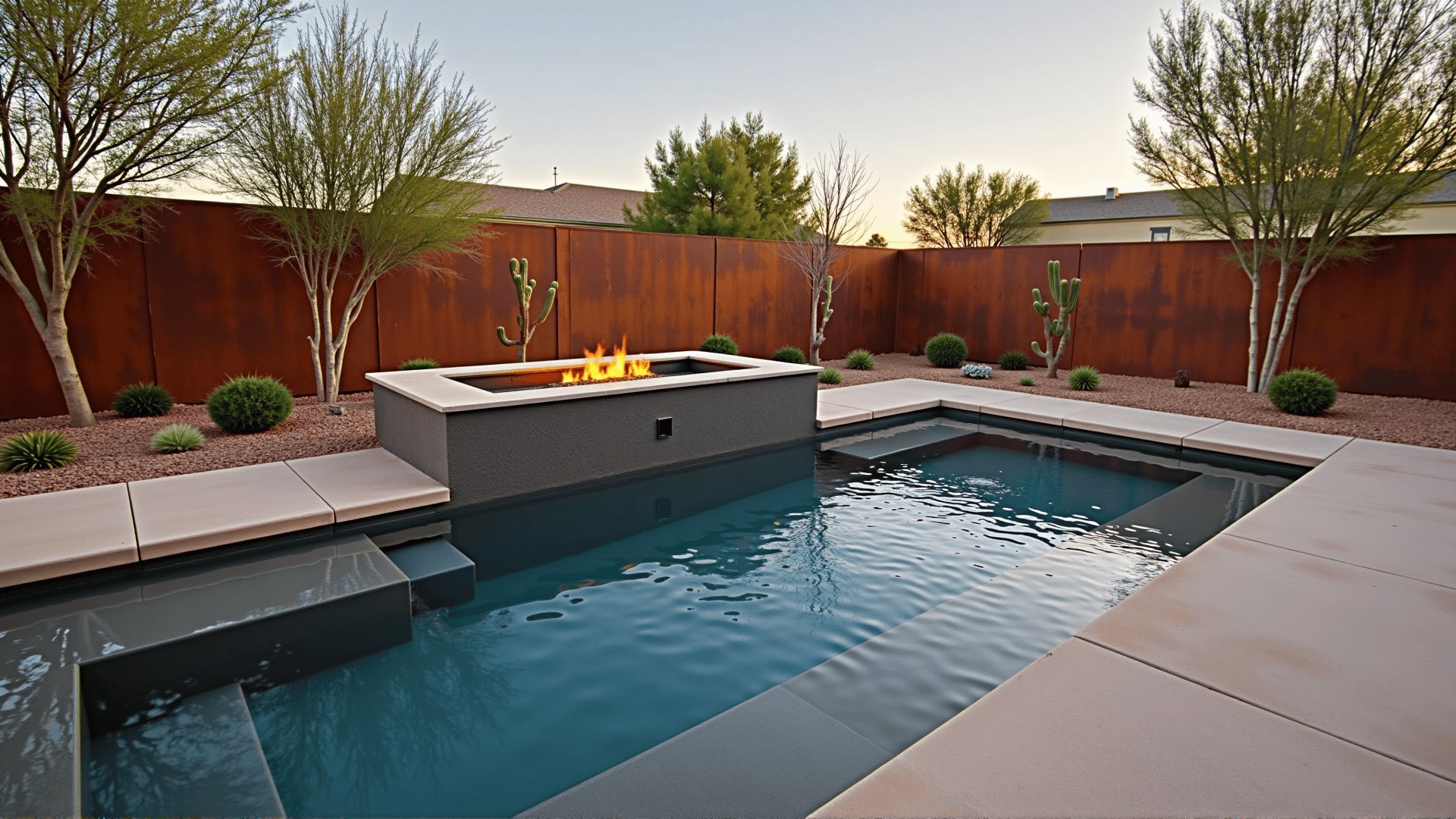
I'll never forget the evening I stopped by the client's home to check on a recently completed project. They'd opted out of our comprehensive lighting package, assuring me they'd "figure something out later." As I pulled into their driveway at dusk, I saw them sitting on their beautiful new pool deck—in the dark. Their stunning pool was invisible, and their gorgeous landscaping had disappeared into shadows.
We had no idea what we were missing, she admitted sheepishly. Two weeks later, we installed a complete lighting system that transformed their backyard into what she now calls their "evening resort."
Beyond Visibility: Creating Ambiance
Pool lighting isn't just about safety though that's certainly important. Strategic lighting transforms your pool area from a daytime-only amenity into a 24-hour outdoor living space. Think of lighting as having three distinct purposes:

- Task lighting ensures safe navigation through your pool area. Properly illuminated walkways, steps, and entries prevent accidents and create confidence for guests unfamiliar with your space.
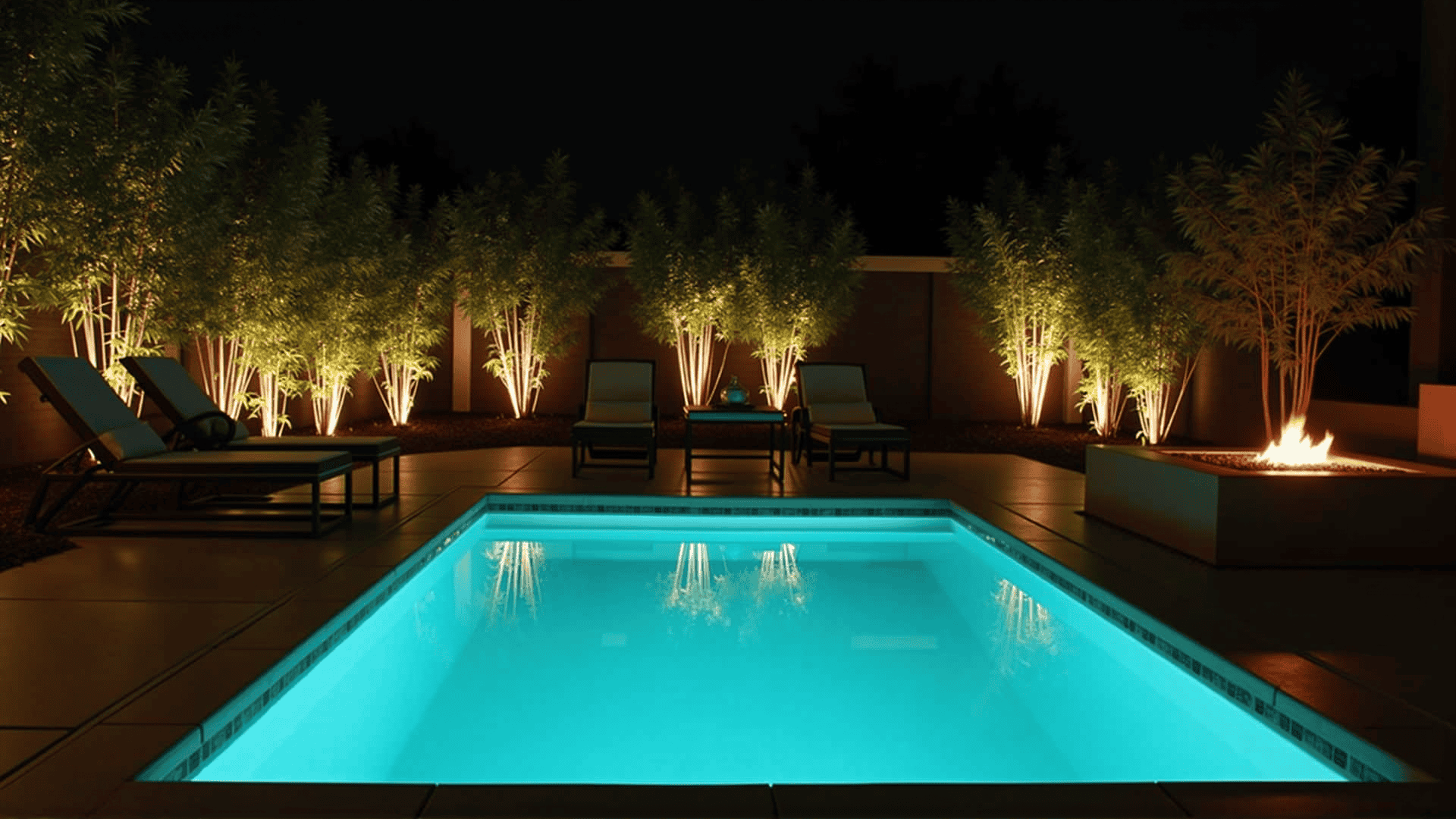
- Accent lighting highlights the features you've invested in—dramatic tree specimens, water features, architectural elements, and of course, the pool itself. This layer creates visual interest and depth.
- Ambient lighting sets the mood and creates atmosphere. This might include soft uplighting on palm trees, gentle illumination from path lights, or the warm glow from landscape lanterns.
Modern Lighting Technologies
The lighting landscape has changed dramatically in recent years. I remember when halogen was the gold standard—now I wouldn't dream of installing anything but LED systems. Here's why:
- LED technology has revolutionized pool and landscape lighting. Today's systems consume 80% less energy than traditional lighting while lasting up to 20 times longer. For a family that uses their pool area regularly, this can mean hundreds of dollars in annual saving
- Smart control systems allow you to program lighting scenes for different occasions—subtle lighting for romantic evenings, brighter settings for family gatherings, and dramatic color-changing effects for parties. Many of my clients control their entire pool environment from their smartphones.
- Color-changing capabilities have advanced tremendously. Early LED color systems were somewhat garish, but today's options provide subtle, sophisticated color palettes that can transform your pool's personality with a tap on your phone.
Strategic Placement for Maximum Impact
After designing hundreds of pool lighting systems, I've learned that restraint often yields the most elegant results. A few principles I follow:
- Layer your light sources at different heights—ground level, mid-level (shrubs and structures), and overhead (trees, pergolas).
- Hide the source, show the effect. Nobody wants to be blinded by visible bulbs. The best lighting systems reveal your beautiful space without revealing themselves.
- Consider sight lines from inside your home. Your pool lighting should create an attractive view from your indoor living spaces, extending your perceived living area even when you're inside.
- Balance is key. Avoid over-lighting some areas while leaving others dark. The eye is drawn to the brightest point in a landscape, so use light strategically to guide attention.
When thoughtfully designed, your pool lighting doesn't just extend usable hours—it creates an entirely different experience of your outdoor space after sunset.
Water Features and Focal Points
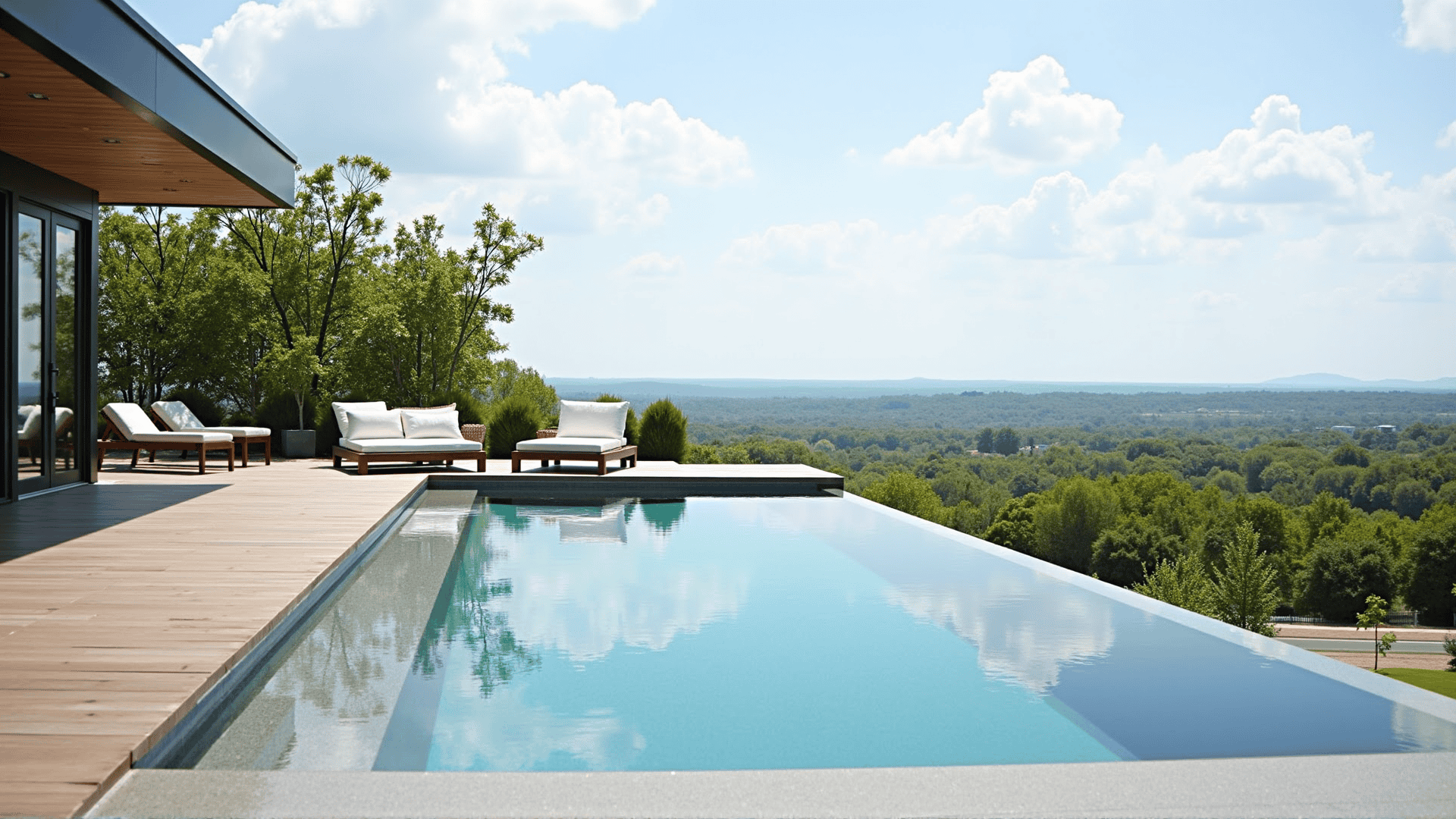
I once built a straightforward rectangular pool for a clinical psychologist and his family. Nice enough, but nothing extraordinary. Six months later, he called me back to add a simple sheer descent waterfall along one edge. "You wouldn't believe the difference," he told me after installation. "The sound of falling water completely changes how we experience the space. My blood pressure drops the moment I step outside now."
That's the magic of water features—they transform pools from mere swimming vessels into multi-sensory experiences.
The Psychology of Moving Water
As humans, we're intrinsically drawn to moving water. It's no coincidence that waterfront properties command premium prices, or that the sound of rainfall helps us sleep. In my twenty years of building custom pools, I've observed that adding even modest water features changes how people interact with their outdoor spaces:
- Auditory masking: A well-designed water feature creates gentle white noise that masks neighborhood sounds—lawnmowers, traffic, or the neighbor's weekend band practice. I've had clients tell me their waterfall made their backyard feel twice as large simply by creating acoustic privacy.
- Visual focal points: Our eyes naturally track movement. Strategically placed water features draw attention to design elements you want to highlight while creating visual rhythm in static spaces.

- Stress reduction: There's legitimate science behind the calming effect of moving water. Water features aren't just beautiful—they're therapeutic.
Popular Water Feature Options
- Waterfalls and Cascades: These range from dramatic multi-tier natural rock formations to sleek contemporary sheet falls. For the client family in Oakridge, we created a stacked stone waterfall that concealed their pool equipment while creating a stunning visual backdrop for their outdoor dining area.
- Bubbling Boulders: Perfect for smaller spaces, these partially submerged rocks create gentle bubbling effects without extensive plumbing requirements. They're particularly effective in naturalistic pool designs.
- Deck Jets and Laminars: These shoot arcing streams of water from your pool deck into the pool. The Jacobsens, both engineers, opted for programmable LED-illuminated jets that create changing patterns—their grandchildren are mesmerized by the "dancing water."
- Scuppers and Spillways: These architectural elements create controlled water flow between elevated spa areas and the main pool, or from raised walls. They provide both visual interest and soothing sound.
Integrating Fire Elements
Some of my most striking projects combine water with fire elements. The primal contrast creates undeniable drama in your outdoor space. Options include:
- Fire bowls: Elevated vessels with flames that reflect on the water surface below
- Fire pits: Gathering spaces adjacent to water features
- Fire walls: Dramatic backdrop elements where flames dance behind falling water
For the Thorntons' Mediterranean-inspired pool, we installed a series of copper fire bowls along the raised back wall, with water scuppers between them. The combination creates a captivating play of elemental forces that makes their evening entertaining space truly extraordinary.
Practical Considerations
Water features require thoughtful planning for:
- Proper hydraulics (separate pumps are often needed)
- Sound control (adjustable flow rates allow customization)
- Maintenance accessibility
- Wind considerations (to prevent excessive splash or water loss)
When properly designed, water features aren't just decorative elements—they become the heart of your outdoor experience, creating the sensory backdrop that makes your pool area a true retreat from everyday stress.
Privacy Solutions
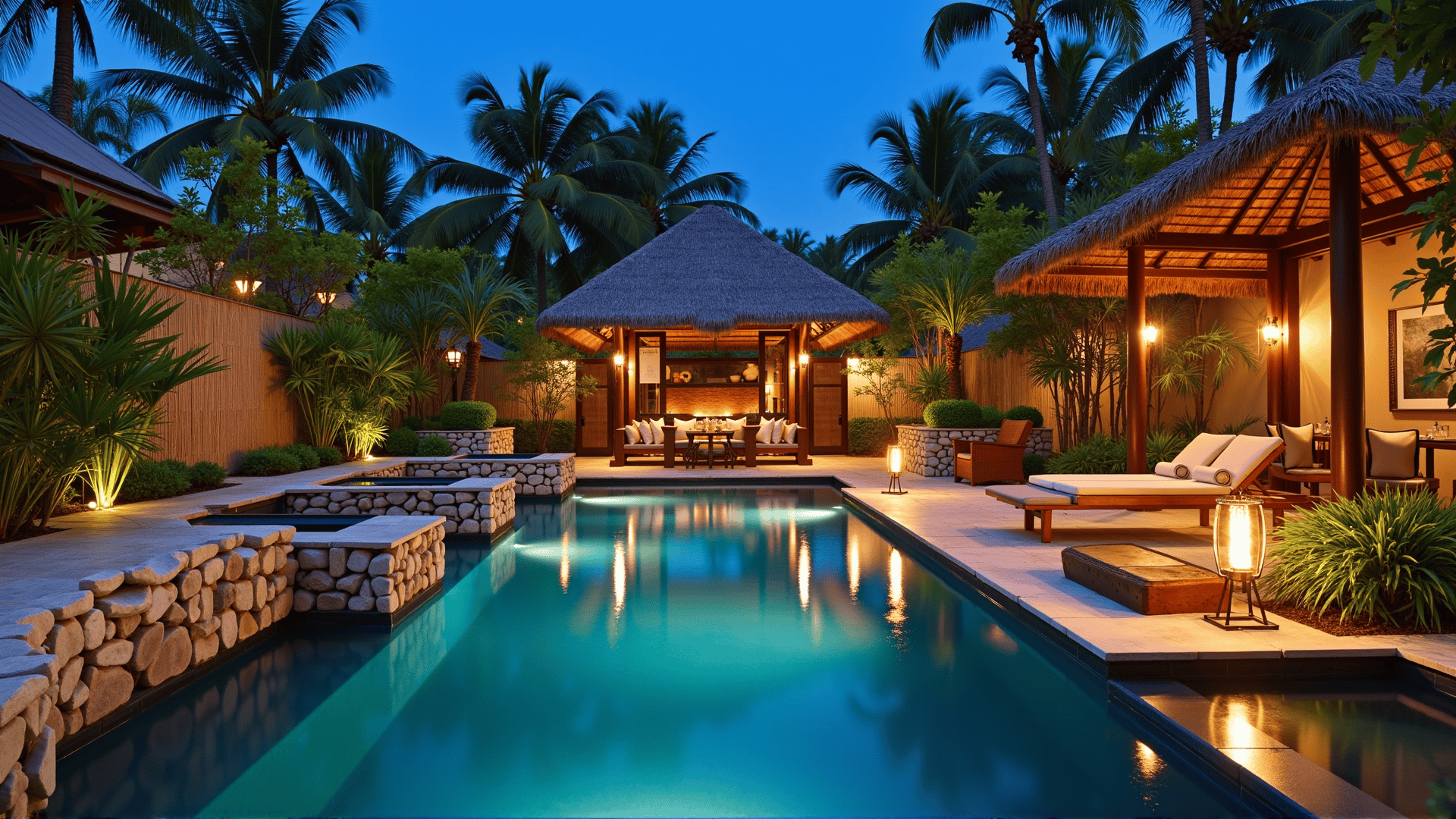
I remember the Hendersons' faces when they first entertained in their beautiful new pool. Their expressions weren't of joy but discomfort. Why? Their neighbor's second story windows looked directly into their pool area, creating what Mrs. Henderson described as "swimming in a fishbowl." Privacy wasn't in their original design requirements, but it quickly became their top priority.
In today's world of closer housing developments and two-story homes, creating privacy around your pool isn't just about seclusion—it's about creating a true retreat where you can genuinely relax.
Natural Screening Solutions
In my experience, natural privacy screens often provide the most beautiful and environmentally friendly solutions. Here's what works exceptionally well:
- Strategic Evergreen Placement: I often recommend creating a "privacy backbone" of columnar evergreens like Italian Cypress, Thuja Green Giant, or Sky Pencil Holly. These provide year-round screening without consuming excessive space. For the Morgans in Hillcrest, we installed a staggered row of Emerald Green arborvitae that matured within two years to create a living wall between their pool and their neighbor's patio.
- Layered Plantings: Single-row hedges can look stark and artificial. Instead, create depth by layering different heights and textures. For a university professor's mid-century modern home, we combined tall bamboo clusters with mid-height pittosporum and lower ornamental grasses to create a natural-looking boundary that offered complete privacy without feeling like a fortress.
- Raised Planter Beds: For immediate results, consider elevated planters that give smaller plants a height boost. This approach worked perfectly for Dr. Wilson's urban courtyard pool, where space was limited but neighboring apartments were very close.
Structural Solutions with Style
When vegetation alone isn't sufficient, structural elements can provide immediate privacy while complementing your design aesthetic:

- Decorative Panels and Screens: Today's architectural panels come in materials ranging from weather-resistant wood composites to powder-coated aluminum with intricate laser-cut designs. For a contemporary home in Lakeview, we installed Corten steel panels with a custom geometric pattern that created both privacy and striking shadow patterns as the sun moved across the sky.
- Pergolas with Side Screening: Overhead structures can be modified with side panels, outdoor curtains, or retractable screens to block specific sight lines while maintaining airflow.
- Strategic Walls and Raised Elements: Sometimes a single short wall or raised spa wall positioned to block a specific sight line can provide targeted privacy without enclosing the entire space.
Creating “Privacy Zones”
Not every inch of your pool area needs the same privacy level. I often recommend creating:
- High-Privacy Areas: Change spaces, conversation nooks, or sunbathing spots.
- Moderate-Privacy Areas: Dining or socializing spaces.
- Open Areas: Portions that maintain views and connection to the broader landscape.
For the client's property, which backed up to a nature preserve, we focused privacy screening on the sides facing neighboring properties while leaving the back completely open to the beautiful natural views.
The most successful privacy solutions feel intentional rather than reactive—they become design features in their own right, enhancing your outdoor experience rather than simply blocking unwanted views. With thoughtful planning, your private pool paradise can offer both seclusion and style.
Practical Considerations

We'd completed his stunning pool and landscape project just six months earlier—complete with elaborate gardens, custom lighting, and a sophisticated water feature system. "Everything's dying," he told me anxiously. The beautiful, lush landscape we'd installed was withering away because we hadn't adequately addressed one critical factor:
maintenance requirements for his busy professional schedule. After years in this business, I've learned that the most beautiful pool landscapes are the ones that align with their owners' lifestyle realities. Let's talk about the practical side of pool landscaping that often gets overlooked in the excitement of design.
Maintenance Reality Check
Be honest with yourself (and your contractor) about your maintenance tolerance. Are you someone who enjoys puttering in the garden on weekends, or do you want a "set it and forget it" approach? This single factor should drive many of your decisions.
For the busy executive family in Westlake, we created what I call a "maintenance-minimal" design evergreen foundation plants, automated irrigation with moisture sensors, and composite decking rather than wood. Sure, they sacrificed some of the showier seasonal displays, but their space looks fantastic year-round with quarterly professional maintenance.
Contrast this with the retired couple in Oak Park who wanted a weekly gardening project. Their pool landscape includes cutting gardens, seasonal containers that get refreshed regularly, and more delicate specimen plants that require attention. Both approaches can be beautiful—the key is matching the design to your personal reality.
Budget Planning: Initial vs. Long-term
One mistake I consistently see is homeowners spending their entire budget on the initial installation without allocating resources for:
- Phased implementation: Sometimes it makes sense to install the "bones" of your landscape immediately after pool construction, then add more elaborate elements over time. This approach allowed the Johnsons to spread their investment over three years while still enjoying their pool from day one.
- Maintenance funds: That elaborate water wall with multiple pumps? It's going to need professional servicing. Those beautiful specimen plants? They might need specialized care. Budget for ongoing maintenance, not just installation.

- Technology upgrades: Smart irrigation systems, lighting controllers, and pool automation technology continue to improve. I recommend reserving some budget for technology upgrades every few years.
Seasonal Considerations
Your pool landscape should be designed for year-round appeal, even if your swimming season is limited. I remember visiting a client in January whose pool area looked so desolate it made the whole property feel abandoned. Now I always discuss "winter interest" elements—architectural features, evergreens, ornamental grasses, and strategic lighting that ensure your backyard remains an asset even in off-seasons.
For clients in four-season climates, I recommend creating distinct "seasonal moments" throughout the year:
- Spring bulb displays as the pool is being opened
- Summer flowering plants during peak swimming season
- Fall foliage color as usage winds down
- Winter structure and evergreens when the pool is closed
When properly planned, your pool landscape doesn't disappear when the cover goes on—it simply shifts into a different but equally appealing mode for each season.
Working With Professionals
I've seen it countless times over my years in the pool industry: the "disjointed approach." A homeowner hires a pool builder who focuses solely on the pool shell, then separately contracts a landscaper who has no experience with pool environments, followed by yet another company for lighting. The result? A backyard that feels like three different projects awkwardly coexisting rather than a cohesive outdoor living space.
The Integrated Design Approach
The most successful pool projects I've been involved with follow what I call an "integrated design approach." This means bringing together key professionals early in the planning stages to create a comprehensive vision. Here's why this matters:
- Technical Integration: Your pool systems, landscape irrigation, lighting, and possibly outdoor kitchen utilities all need to work together without conflicts. I remember one unfortunate project where a landscaper severed a critical pool line while installing a seemingly simple garden bed—a $5,000 repair that could have been avoided with proper coordination.
- Aesthetic Harmony: Each element should complement rather than compete with the others. When Dr. Williams hired separate companies for his pool and landscape, he ended up with a modern minimalist pool surrounded by a Victorian-inspired garden—a jarring combination that satisfied no one.
- Budget Efficiency: Coordinated projects often save money through shared resources like excavation equipment, material deliveries, and site preparation. For the Andersons in Lakeside, our integrated approach saved nearly 15% on their overall project compared to handling each component separately.
Finding the Right Team
Look for professionals who:
- Communicate clearly about both process and design - If they can't explain their vision and process to you in terms you understand, that's a red flag.
- Have experience with comprehensive outdoor living spaces - Ask to see complete projects, not just pools or just landscaping.
- Listen more than they talk - Your vision should drive the project, not their portfolio ambitions.
- Can provide references from projects similar to yours - This is non-negotiable.
The Design Process Timeline
Understanding the typical timeline helps set realistic expectations:
- Concept Development: 2-4 weeks This includes site analysis, understanding your lifestyle needs, and creating preliminary design concepts. When we worked with the Martinez family, we spent two full consultation sessions just understanding how they intended to use their outdoor space before drawing a single line.
- Design Refinement: 2-3 weeks This phase involves feedback, adjustments, and finalizing material selections. For most clients, this involves 2-3 revision cycles to get everything just right.
- Construction Documentation: 1-2 weeks Detailed plans that contractors can build from, including technical specifications.

- Permitting: 2-8 weeks (varies significantly by location) This is often the most variable timeframe in the entire process.
- Construction Coordination: Typically 8-12 weeks For complex projects, this can extend to 16 weeks or more, especially if custom elements are involved.
The most common mistake I see homeowners make is rushing the design phase only to spend weeks making changes during construction—when modifications are exponentially more expensive. As I often tell my clients: "Patience in planning saves both time and money during building."
When you work with professionals who understand the entire outdoor living ecosystem, your pool becomes not just a water feature, but the centerpiece of a thoughtfully designed environment that enhances your home and lifestyle for years to come.
Beyond the Pool: Creating Your Personal Paradise with Designer Custom Pools
After 48 years of transforming ordinary backyards into extraordinary outdoor living spaces, we've learned that the difference between a good pool and a great one lies in those thoughtful finishing touches. Every element we've discussed—from hardscaping and plants to lighting and water features—works together to create not just a place to swim, but a personal resort that enhances your daily life.
What truly sets Designer Custom Pools apart is our comprehensive approach. We don't just build pools; we create integrated outdoor experiences tailored specifically to your family's lifestyle. Our clients consistently tell us that their pool area has become the heart of their home—where memories are made, stress melts away, and family connections deepen.
Your backyard transformation deserves the attention to detail and wealth of experience that only comes from decades of dedicated craftsmanship. Why trust your investment to anyone with less experience?
Ready to transform your backyard into the private retreat you've always imagined? Let's start planning your perfect pool environment today. Call us at (310) 261-2440 or visit our contact page to schedule your personal consultation. Your dream backyard is just one conversation away.