Modern Pool Fencing Options: A Designer's Guide to Safe & Stylish Choices
Your pool fence is more than just a safety barrier – it's an integral design element that shapes your entire outdoor living space. This comprehensive guide explores everything from essential safety requirements (48" minimum height, self-closing gates) to material choices (aluminum, glass, vinyl) that balance durability with style. We've covered crucial maintenance considerations, smart budgeting strategies, and innovative features like integrated lighting and smart locks.
Whether you're prioritizing unobstructed views with modern glass panels, seeking traditional elegance with aluminum fencing, or wanting maximum privacy with vinyl options, each choice comes with its own set of considerations for safety, maintenance, and long-term value. The key is finding the perfect balance that works for your specific needs while meeting all safety requirements and complementing your pool's design.
Safety First: Pool Fencing Requirements & Regulations

After 25 years of building custom pools, I've learned that the most exciting part for homeowners is imagining those perfect summer days by their new pool. But as your trusted pool builder, I need to have a candid conversation about something equally important: safety fencing.
Think of pool fencing like your home's security system – it's that critical first line of defense protecting what matters most. Let me walk you through the essentials every homeowner needs to know.
The Non-Negotiables
Your pool fence isn't just about aesthetics (though we'll make it beautiful); it's about meeting strict safety standards. Here are the key requirements that keep you both safe and compliant:
- Minimum Height: Your fence must be at least 48 inches tall, measured from the ground. I always recommend going up to 54 inches – those extra 6 inches can make a real difference, especially if you have adventurous little ones.
- Gap Control: Here's something many don't consider – the gaps between vertical bars should be no more than 4 inches wide. Why? That's about the size that prevents a small child from squeezing through. Think of it as the "head test" – if a head can't fit, the body can't follow.
- Ground Clearance: Keep the space between the bottom of the fence and the ground to 2 inches or less. I've seen countless DIY installations miss this crucial detail.
Gates: Your Critical Access Point
The gate is where I see most safety compromises happen. Here's what's required:
- Must open outward, away from the pool
- Self-closing and self-latching mechanisms are mandatory
- Latch height should be at least 54 inches from the ground
- Child-resistant lock installation is essential
Pro tip: Test your gate's self-closing mechanism monthly. Just like changing your smoke detector batteries, make it a regular habit.
The “Climb-Free” Zone
One often overlooked requirement is the "climb-free zone." Any furniture, large planters, or landscape features that could serve as a climbing aid should be kept at least 4 feet away from the fence. I always tell my clients: "If a determined 5-year-old can't climb it, you've done it right."
Remember, while these requirements might seem stringent, they're designed with one purpose: keeping your loved ones safe. As someone who's built hundreds of pools, I can tell you that a properly installed safety fence provides something priceless – peace of mind while you enjoy your new backyard oasis.
A quick note: While this guide covers the general requirements, specific regulations can vary by location. During our initial consultation, we'll review your local codes in detail to ensure your pool fence meets or exceeds all safety standards.
Popular Pool Fence Materials
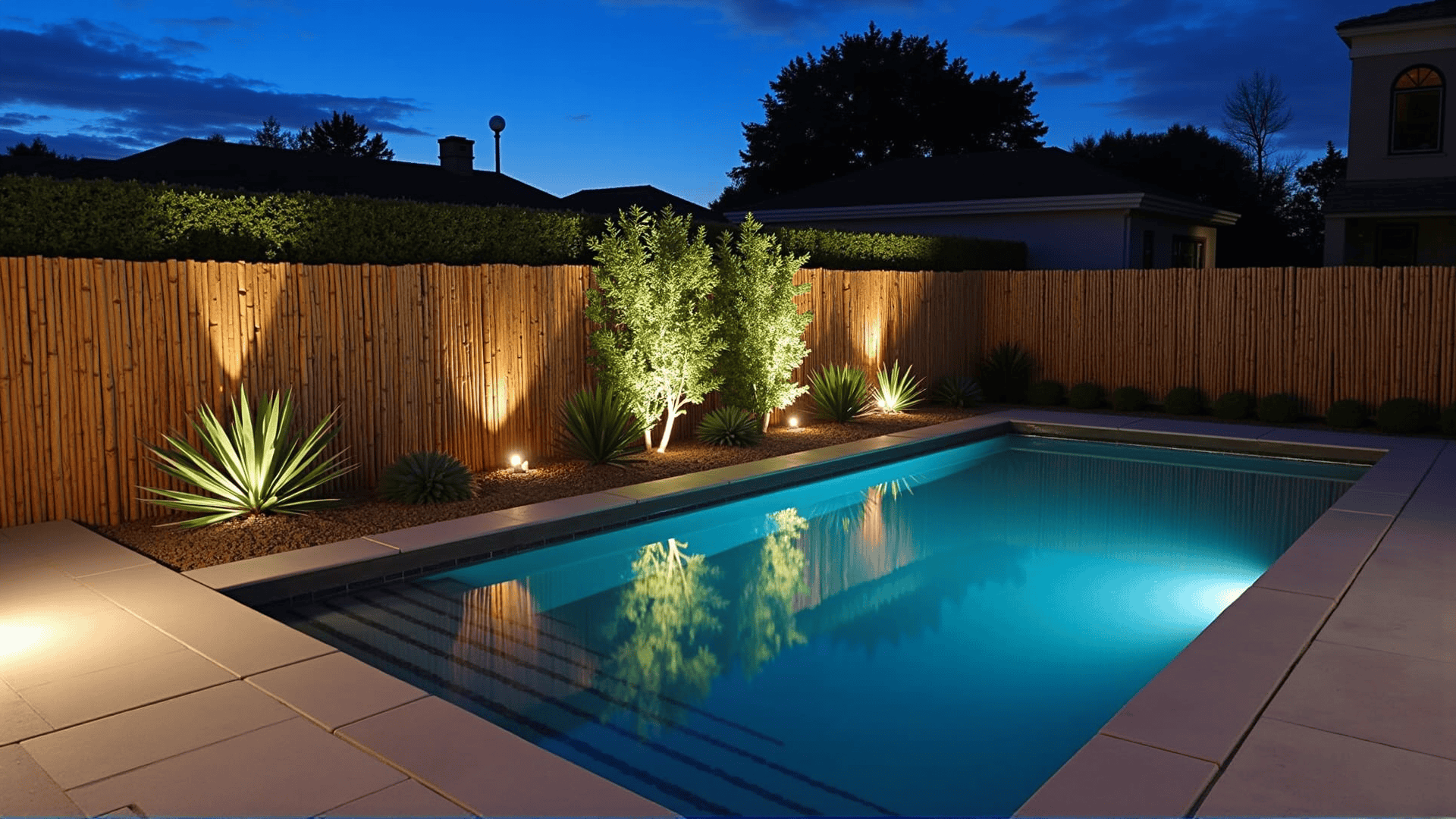

Having designed and built custom pools for over two decades, I've seen pool fencing materials evolve dramatically. Think of choosing your pool fence material like selecting the perfect frame for a masterpiece – it needs to enhance your pool's beauty while providing reliable protection. Let me break down the most popular options I discuss with my clients.
Aluminum & Wrought Iron
If you're looking for that perfect balance of elegance and durability, aluminum and wrought iron fencing remain top choices. Imagine the clean lines of a black aluminum fence framing your pool like a sophisticated picture frame. These materials offer:
- Exceptional durability (I have clients whose aluminum fences look pristine after 15+ years)
- Minimal maintenance requirements
- Excellent visibility for pool monitoring
- Wide range of design options
Bonded Los Angeles Pool Contractor: If you live near the coast, opt for powder-coated aluminum – it handles salt air like a champ.
Glass Panel Fencing
Remember when glass fencing was considered too extravagant? Times have changed. Glass panel fencing has become increasingly popular among my clients who want to maintain their landscape views. It's like having an invisible shield around your pool. Benefits include:
- Unobstructed views of your pool and landscape
- Wind protection for pool area
- Modern, sophisticated appearance
- Creates an illusion of more space
Designer's note: Consider frameless glass panels for the most seamless look – they're particularly stunning with infinity pools.
Vinyl & Composite
Think of vinyl fencing as the Tesla of pool fencing – modern, efficient, and surprisingly sophisticated. The technology has come so far that many of my clients can't tell the difference between high-end vinyl and traditional materials until they learn about the maintenance benefits:
- Zero painting or staining required
- Resistant to chlorine and moisture
- Available in numerous styles and colors
- Excellent for privacy options
Mesh Safety Barriers
While not always the primary fence, mesh safety barriers have become increasingly popular as a supplementary safety measure. They're like having a backup camera in your car – an extra layer of security that's there when you need it:
- Easily removable for special occasions
- Highly effective child safety barrier
- Nearly invisible from a distance
- Cost-effective safety solution
Remember, your choice of material should reflect both your aesthetic preferences and practical needs. During our design consultations, we'll discuss how each option might complement your home's architecture and your lifestyle requirements. The best pool fence is one that you almost forget is there – until you need it.
Choosing the Right Style for Your Landscape

After designing hundreds of custom pools, I've learned that selecting the right fence style is a bit like choosing the perfect pair of shoes for an outfit – it needs to complement everything while serving its purpose perfectly. Let me share some insider perspective on matching your pool fence to your landscape.
Modern vs. Traditional: Finding Your Match
Your home's architectural style is your north star here. I recently worked with a client who insisted on ultra-modern glass fencing for their Tudor-style home. After some gentle guidance and 3D renderings, they opted for a classic wrought iron design that beautifully complemented their home's character while maintaining a contemporary feel.
Design tip: If your home features strong horizontal lines, consider fence styles that echo this pattern. The same goes for vertical elements – it's all about creating visual harmony.
The Privacy Factor
Here's a question I always ask my clients: "When you imagine your perfect pool day, who do you picture there?" Your answer helps determine your privacy needs:
1. Full Privacy Needed
- Perfect for urban settings
- Ideal if your pool is visible from the street
- Great for creating an intimate atmosphere
2. Partial Views Preferred
- Maintains connection with surrounding landscape
- Allows natural surveillance of pool area
- Creates an open, airy feeling
Pro insight: Consider the "golden ratio" – I often recommend mixing solid panels with more open sections to achieve the perfect balance of privacy and openness.
Preserving Your View
One of my favorite projects involved a hillside pool where the homeowners had a stunning valley view. We used glass panels on the view-facing side and traditional fencing elsewhere – like having a front-row seat to nature while maintaining security. Remember:
- Glass panels maximize views
- Aluminum or iron bars provide minimal visual obstruction
- Strategic placement of solid sections can frame views like artwork
Integration with Pool Design
Think of your pool fence as part of a cohesive design story. If your pool features modern geometric lines, your fence should speak the same design language. I always remind clients that the fence isn't just a safety requirement – it's an integral part of your outdoor living space.
Designer's secret: Use your fence posts as anchor points for landscape lighting – it creates beautiful evening ambiance while highlighting your fence's architectural elements.
Remember, the right style choice should feel effortless – like it was always meant to be there. During our design process, we'll create detailed visualizations showing how different fence styles complement your specific landscape and pool design. After all, your pool fence is more than a barrier; it's the frame for your outdoor masterpiece.
Durability & Maintenance Factors

Let's talk about something I've learned the hard way over my years in pool construction: a pool fence is only as good as its ability to stand up to time and the elements. Think of it like a marathon runner – it needs to go the distance while looking good doing it.
Weather Warriors
Aluminum & Iron
- Excellent strength against wind (I've seen them survive tropical storms)
- Powder coating is your best friend against rust
- Can last 20+ years with proper care
Pro tip: Check coating integrity annually, especially at weld points
Glass Panels
- Practically immortal against weather
- Zero rust concerns
- Tempering makes them surprisingly storm-resistant
Maintenance note: Water spots are your main enemy here
Vinyl
- Won't rust or corrode (perfect for pool chemicals)
- Handles temperature swings like a champion
- UV-resistant varieties prevent yellowing
Real talk: Premium vinyl is worth every penny – I've seen cheap options warp within years
Chemical Exposure Reality Check
Here's something many don't consider: your pool fence lives in a constant cloud of chlorine molecules. I always tell my clients, "Your fence is taking a swim too, just more slowly." This means:
- Regular cleaning is crucial (quarterly at minimum)
- Chemical-resistant finishes are worth the investment
- Pool chemical storage should be away from fencing
Pro insight: Consider prevailing winds when planning chemical-resistant sections
The Maintenance Calendar
Let me share my recommended maintenance schedule, refined over years of post-installation visits:
Monthly
- Gate mechanism check
- Clean obvious debris
Quarterly
- Thorough cleaning
- Hardware tightening
- Lubricate moving parts
Annually
- Professional inspection
- Touch-up any finish issues
- Level check (ground settling happens)
Time-saving tip: Sync your fence maintenance with your pool maintenance schedule – efficiency at its finest!
Remember, investing in quality materials and regular maintenance isn't just about aesthetics – it's about protecting your investment and ensuring your fence performs its primary safety function for years to come. During our design phase, we'll discuss how different materials fit your lifestyle and maintenance preferences, because the best fence is one that you can maintain within your schedule and budget.
Budget Considerations

Let's talk money – and I promise to be as straightforward as I've been with hundreds of homeowners over my years in pool construction. Choosing a pool fence is a bit like buying a car: there's an option for every budget, but going too cheap can cost you more in the long run.
Initial Investment Breakdown
Here's what I typically share in my client consultations about material costs (per linear foot):
1. Entry-Level Options
- Aluminum: $35-50
- Basic vinyl: $25-40
- Mesh barriers: $20-30
Real talk: These prices include professional installation – because a perfectly good fence installed poorly isn't worth the savings.
2. Mid-Range Investments
- Premium vinyl: $45-65
- Decorative aluminum: $55-75
- Iron fencing: $60-85
Pro insight: This is the sweet spot where durability meets aesthetics.
3. Luxury Choices
- Frameless glass: $150-300
- Custom wrought iron: $100-200
- Designer composite: $80-120
Designer's note: Often worth it for focal points or view preservation, even if not used for the entire perimeter.
The Long Game: Cost vs. Longevity
Here's something I always tell my clients – think in decades, not years. Let me break down what I've observed in real-world scenarios:
20+ Year Materials
- Glass panels
- Quality aluminum
- Premium vinyl
Investment tip: These typically offer the best cost-per-year value.
10-15 Year Materials
- Standard vinyl
- Basic aluminum
- Iron (with regular maintenance)
Maintenance note: Factor in periodic refinishing costs.
Additional Features Worth Considering
Don't forget these often-overlooked budget items:
- Gate hardware upgrades ($150-300)
- Integrated lighting ($20-40 per post)
- Special corner treatments ($75-150 per corner)
Pro tip: Allocate 10% of your budget for these enhancements – they make a significant difference in both safety and aesthetics.
Return on Investment
Think of your pool fence as part of your home's curb appeal portfolio. A well-chosen fence can:
- Add 3-7% to your property value
- Reduce insurance premiums
- Decrease maintenance costs over time
Real estate insight: I've had clients recoup up to 50% of their fence investment when selling their homes.
Remember, while budget is important, it shouldn't be your only consideration. During our design consultation, we'll explore options that balance your financial comfort zone with long-term value and safety requirements. After all, the most expensive fence isn't always the best choice, but the cheapest option rarely is either.
Smart Integration with Pool Design

After designing pools for more than two decades, I've learned that integrating a fence into your pool design is like composing a symphony – every element needs to harmonize perfectly. Let me share some insights that have transformed ordinary pool barriers into stunning design features.
Strategic Placement Planning
Think of your pool fence as the conductor of traffic flow around your outdoor space. Here's what I consider when planning placement:
Sight Lines
- Create intentional views from key areas
- Frame landscape features
- Maintain supervision angles from indoor spaces
Designer's secret: I often use 3D modeling to show clients exactly how sight lines will work from their kitchen or living room windows.
Access Points When planning gate locations, consider:
- Natural pathways from the house
- Equipment access routes
- Emergency entry points
In-ground Pool Builders Los Angeles: I always recommend placing gates where they feel intuitive – fight against the temptation to put them where they're merely convenient for construction.
Concrete Pools: The Durable but Demanding
Like a well-built stone house:
- Structure lifespan: 50+ years with proper care
- Surface refinishing: Needed every 10-15 years
- Structural integrity: Excellent, but can develop cracks
- Common issues: Surface etching, plaster wear
Pro Insight: I always tell clients, "A concrete pool will likely outlast your mortgage, but it'll need some facelifts along the way." The key is staying ahead of maintenance rather than playing catch-up.
Landscape Integration
Your fence shouldn't look like an afterthought. Here's how we make it belong:
Planting Zones
- Create buffer areas with ornamental grasses
- Use climbing plants strategically
- Design plant heights to complement fence lines
Real-world example: One of my favorite projects used native vines on a portion of fence to create a living wall effect while maintaining structural integrity.
Lighting Magic
Lighting transforms your fence from a daytime barrier into a nighttime feature:
- LED post caps for ambiance
- Strategic uplighting for dramatic effects
- Motion-sensor security lights at gates
Pro insight: Solar options have come a long way – I now recommend them for about 60% of my projects.
Creating Functional Zones
Your fence can help define distinct areas:
- Active swimming zones
- Quiet lounging spaces
- Dining/entertainment areas
Design philosophy: I always say, "Let the fence work for you, not against you."
Tech Integration
For my tech-savvy clients, we're seeing exciting innovations:
- Smart gate locks with phone control
- Integrated security cameras
- Automated lighting systems
Future-proofing tip: Always install conduit for future tech additions – it's inexpensive during construction but invaluable later.
Remember, a well-integrated pool fence should feel like it grew there naturally. During our design process, we'll explore how these elements can work together to create not just a safe pool area, but an outdoor living space that enhances your daily life. After all, the best pool designs are the ones where safety features become beautiful features.
Common Pool Fence Mistakes to Avoid

In my years of building custom pools, I've seen my fair share of fence faux pas. Think of these as the "what not to do" greatest hits – mistakes that even the savviest homeowners sometimes make. Let me share some wisdom gained from correcting these issues over the years.
Material Mismatches
The most common mistake I see is choosing materials that fight with your home's architecture. It's like wearing a tuxedo to a beach party – it just doesn't work. Here's what to watch for:
Common Missteps
- Ultra-modern glass fencing on traditional homes
- Rustic wood fencing on contemporary properties
- Budget materials in luxury settings
Real example: A client once insisted on wrought iron for their coastal home – within two years, rust had become their constant companion
Installation Issues
Story time: Last summer, I met a homeowner who'd hired a general contractor to install their pool fence. The result? A beautiful fence that didn't meet code requirements. Here's what often goes wrong:
Critical Errors
- Incorrect post depth
- Improper spacing between pickets
- Unlevel installation on sloped ground
Pro tip: Pool fencing isn't like regular fencing – it requires specialized knowledge of safety codes and regulations.
Design Integration Oversights
Think of your pool fence as part of an ecosystem, not just a barrier. Common mistakes include:
- Blocking key sight lines from the house
- Ignoring natural traffic patterns
- Poor gate placement
Designer insight: Always plan your fence with your entire outdoor living space in mind.
Security Vulnerabilities
Here's where experience really matters. I've seen well-meaning installations create unexpected safety issues:
- Climbable designs near fence lines
- Inadequate gate latching systems
- Gaps created by ground settling
Safety note: Remember, a pool fence is only as secure as its weakest point.
Maintenance Prep Failures
One of my favorite analogies: A pool fence without maintenance planning is like buying a car without considering oil changes. Plan for:
- Access points for equipment
- Space for cleaning and repairs
- Future landscaping growth
Practical tip: Leave at least 3 feet of clearance around your fence for maintenance.
Here's my golden rule: The best pool fence is one that provides safety without sacrificing style or functionality. During our design process, we'll carefully avoid these common pitfalls while creating a fence that enhances your pool area. After all, learning from others' mistakes is much less expensive than learning from your own!
Additional Safety Features

As someone who's built hundreds of pools – and has three kids of my own – I can tell you that when it comes to pool safety, the fence is just the beginning. Think of your pool fence as your first line of defense, but like any good security system, layered protection is key.
Self-Closing Gate Mechanisms: Your Silent Guardian
I always tell my clients: "The best safety feature is the one that works even when you forget." That's why I'm passionate about self-closing gates.
What to Look For:
- Hydraulic closers (they're like your pool's bouncer)
- Industrial-grade springs
- Weather-resistant materials
Pro tip: Test your gate's closing mechanism monthly using the "two-finger test" – if it requires more force than that to keep open, it needs adjustment.
Smart Locks & Latches
Technology has revolutionized pool security. Modern options include:
- Magnetic locks with smartphone control
- Key-code access systems
- Height-adjustable latches
Real-world insight: One of my clients integrated their pool gate lock with their home security system – brilliant addition for peace of mind.
Pool Alarms & Sensors
Here's where my tech-savvy clients get excited. Today's pool safety technology is impressive:
Surface Alarms
- Detect water disturbance
- Immediate alert system
- Weather-smart technology
Personal note: I installed one in my own pool – it's caught more than a few unauthorized night swims by teenage kids!
Gate Sensors
- Immediate notifications when opened
- Activity logging
- Battery backup systems
Emergency Access Features
Something often overlooked but crucial – emergency response planning:
- Knox boxes for first responders
- Clear access pathways
- Proper lighting for nighttime access
Safety tip: Keep rescue equipment visible but secured – a shepherd's hook and life ring are essential.
Integration with Home Systems
The smart home revolution has reached pool safety:
- Automated lighting activation
- Camera monitoring systems
- Voice-activated controls
Designer's insight: We can now create safety systems that are both highly effective and virtually invisible.
Remember, these additional features aren't about paranoia – they're about prevention and peace of mind. During our design process, we'll discuss which combination of safety features makes the most sense for your family's specific needs. Because at the end of the day, the best pool is one you can enjoy without worry.
Environmental Impact & Sustainability

After decades in pool construction, I've witnessed a remarkable shift in how we approach environmental responsibility. Today's homeowners aren't just asking about durability and aesthetics – they want to know their pool fence choices align with their environmental values. Let me share some insights that will help you make eco- conscious decisions.
Eco-Friendly Material Options
Think of sustainable fencing like choosing organic produce – it's about making responsible choices that benefit the bigger picture:
Recycled Materials
- Aluminum (my personal favorite – it's infinitely recyclable)
- Composite materials from recycled plastics
- Repurposed steel
Real example: One of my clients used recycled aluminum fencing that saved the equivalent of 1,000 beverage cans from landfills.
Energy Efficiency Considerations
Your fence can actually help reduce energy consumption:
- Solar-powered lighting systems
- Wind barrier placement for pool heating efficiency
- Strategic shade creation
Pro insight: Proper fence placement can reduce pool heating costs by up to 20% – I've seen it firsthand in numerous projects.
Sustainable Installation Practices
We've revolutionized how we approach installations:
- Minimal ground disturbance techniques
- Local material sourcing when possible
- Waste reduction strategies
Installation note: We now use GPS marking to minimize unnecessary digging and preserve root systems.
Local Environment Adaptation
Your fence should work with nature, not against it:
- Native plant integration
- Wildlife-friendly designs
- Water-wise landscaping around fence lines
Designer's tip: I love incorporating native vines that provide natural cooling without compromising fence integrity.
Long-Term Environmental Impact
Consider these sustainability factors:
- Material lifespan and replacement frequency
- Maintenance product environmental impact
- End-of-life recyclability
Practical example: A well-chosen aluminum fence can last 30+ years and be 100% recycled afterward.
Innovative Green Solutions
The future is exciting! We're seeing:
- Living wall integration
- Rainwater harvesting features
- Biodegradable temporary fencing options
Future-focused insight: Some of my recent projects have incorporated solar-powered security features that add both safety and sustainability.
Remember, choosing environmentally conscious fencing isn't just good for the planet – it's often good for your wallet too. During our design consultation, we'll explore options that align with both your environmental values and practical needs. After all, the best pool fences are those that look good, work well, and help preserve our environment for future generations to enjoy.
Making the Right Choice
After reading through this comprehensive guide, you can see why pool fencing is much more than just a safety requirement – it's an integral part of your dream pool project. With 48 years of custom pool building experience, we understand that every detail matters in creating your perfect backyard oasis.
We take pride in being more than just pool builders. Our expertise spans from understanding complex safety regulations to implementing cutting-edge sustainable solutions. We don't just build pools; we create safe, beautiful, and lasting environments for families to enjoy for generations.
Every pool project is unique, and we're committed to finding the perfect fencing solution that matches your style, meets your safety needs, and fits your budget. Our proven track record of successful installations and satisfied clients speaks to our dedication to excellence in every project we undertake.
Ready to start planning your perfect pool and fencing combination? Let our expertise guide you through the process. Call us today at (310) 261-2440 or visit our contact page to schedule a consultation. We'll help you navigate the choices and create the backyard sanctuary you've been dreaming of.
Your perfect pool awaits – let's build it together.