From Concept to Completion: Planning Your Dream Rooftop Pool
Transforming your rooftop into a luxurious aquatic retreat requires careful planning, specialized expertise, and attention to detail. Rooftop pools offer unique advantages maximizing limited urban space, creating an exclusive "oasis in the sky," enhancing property value, and providing health benefits through accessible exercise. However, they also present distinct challenges that demand specialized solutions. From structural considerations that support the immense weight of water to specialized materials like stainless steel and prefabricated panels, from comprehensive waterproofing systems to thoughtful design elements that integrate with your lifestyle, each aspect requires expert guidance. Safety measures, weatherproofing solutions, and ongoing maintenance are essential to protect your investment.
While rooftop pools typically cost 30-50% more than ground-level installations, the unique experience and property value enhancement make them worthwhile for many homeowners. With 48 years of experience transforming ordinary spaces into extraordinary aquatic retreats, Designer Custom Pools brings the specialized expertise needed to turn your elevated dreams into reality.
Why Consider a Rooftop Pool?

After nearly two decades of designing custom pools, I've noticed something fascinating: the most memorable pools aren't always the largest or most expensive—they're the ones that transform an otherwise unused space into something magical. And in my experience, few pool designs create that transformation quite like a rooftop pool.
Maximizing Limited Space in Urban Properties
Let's be honest—not every homeowner is blessed with a sprawling backyard. I've worked with countless clients in urban settings who assumed a pool was simply out of reach given their limited ground space. That's where rooftop pools shine. That flat roof over your garage or home extension? It's prime real estate waiting to be transformed.
One client turned a bland 400 square foot rooftop into the centerpiece of their home—a space that now hosts everything from quiet morning swims to evening gatherings under the stars. When land comes at a premium, building upward rather than outward can be the perfect solution.
Creating a Luxurious “Oasis in the Sky” Experience
There's something undeniably special about swimming with a view. Imagine finishing a long workday and heading upstairs—not just to any pool, but to one that offers panoramic views of your neighborhood, the distant city skyline, or surrounding natural landscapes.
The psychological effect is remarkable. The elevation creates a sense of escape and exclusivity that ground-level pools simply can't match. Add some strategic landscaping, ambient lighting, and perhaps a water feature, and you've created a private retreat that feels worlds away from the daily grind.
Enhancing Property Value and Exclusivity
Let's talk investment. While any well-designed pool adds value to your home, rooftop pools carry a certain exclusivity that can significantly boost your property's market appeal. In my experience, homes with thoughtfully designed rooftop pools tend to command premium prices and attract buyers looking for something extraordinary.
It's worth noting that this isn't just about resale value—it's about creating a distinctive feature that elevates your entire property. As one client put it: "When friends visit, they don't remember my kitchen renovation or hardwood floors. They remember the rooftop pool."
Health and Lifestyle Benefits
Beyond the aesthetic appeal, rooftop pools offer practical health benefits. Swimming remains one of the best full-body, low-impact exercises available. The elevated position typically means better sun exposure, providing that essential vitamin D boost while you exercise.
Many of my clients have transformed their daily routines after installing a rooftop pool. Morning swims before work, evening relaxation sessions, weekend family time—the accessibility of having a pool just steps away from your living space encourages regular use.
Creating a rooftop pool isn't quite as simple as digging a hole in your backyard, but the rewards can be extraordinary. If you're looking for a feature that combines luxury, efficiency, and distinction, it might be time to look up rather than out for your pool solution.
Types of Rooftop Pools
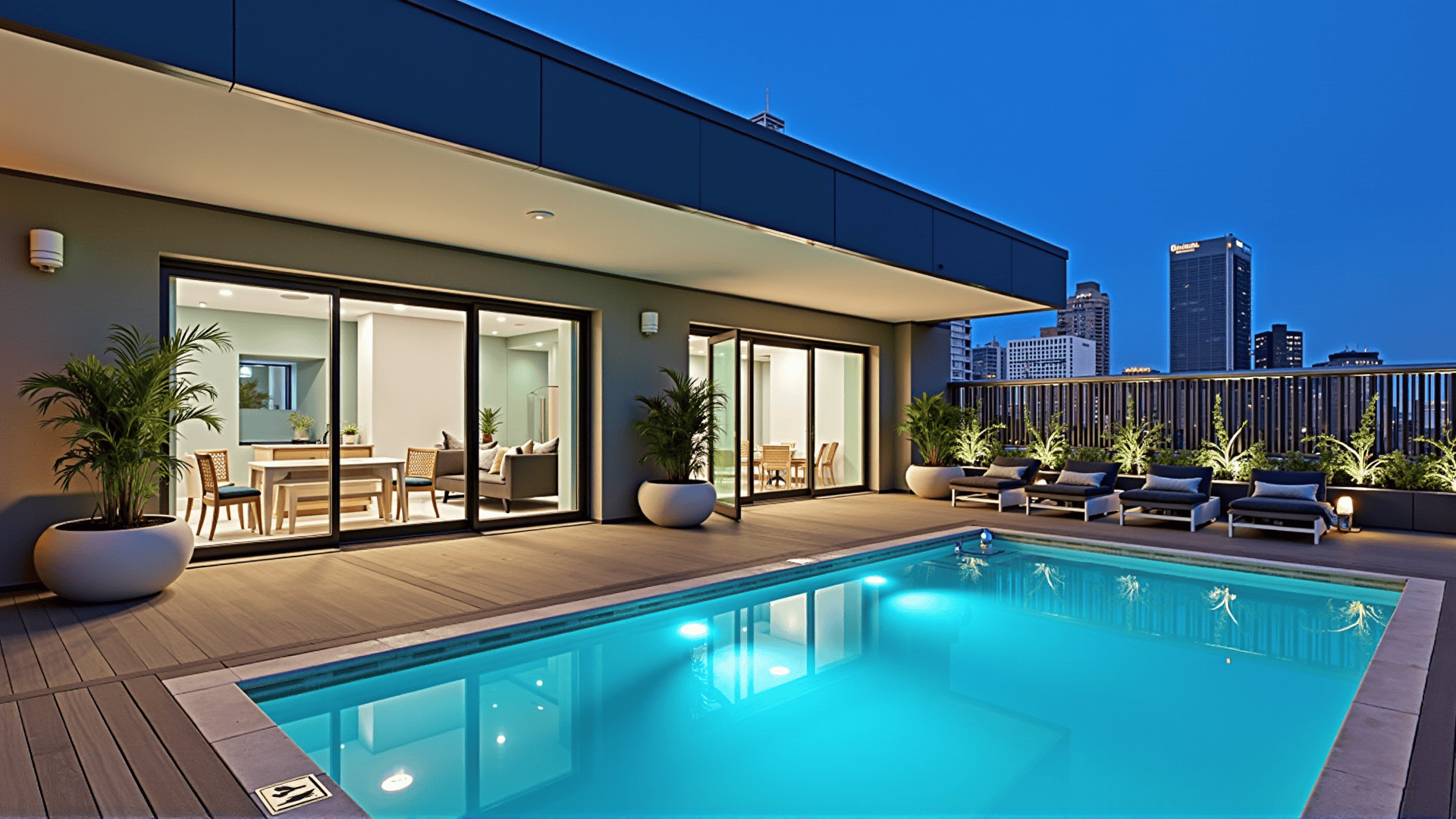
When clients first approach me about rooftop pools, they often have that gleam in their eye from scrolling through glossy magazine photos of infinity edges stretching into cityscapes. But what many don't realize is that rooftop pools come in several distinct varieties, each with its own set of advantages. Let me walk you through the options I've helped design over my years in the industry.
Infinity/Zero Edge Pools
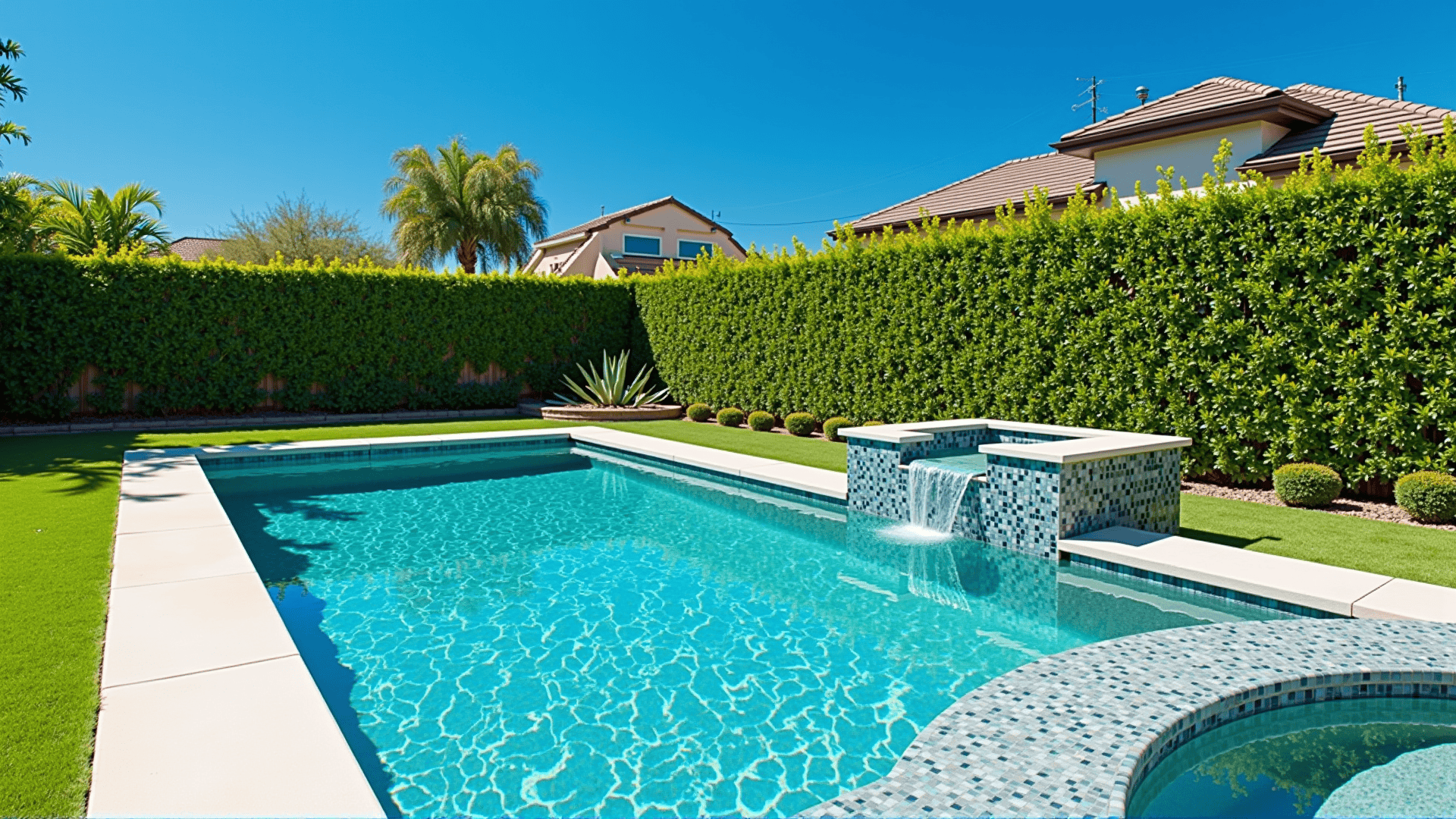
The crown jewel of rooftop installations has to be the infinity pool. There's nothing quite like the visual illusion of water extending endlessly into the horizon. These pools feature one or more edges where water flows over into a hidden catch basin, creating that seamless transition between pool and sky.
I remember installing an infinity edge pool for a home overlooking a valley—the homeowners said it felt like they were swimming directly into the sunset each evening. That's the magic of these designs.
Stunning Transformations by Premium Los Angeles Pool Contractors: The Infinity pools require a drop-off beyond the edge and sophisticated water circulation systems. They're an investment, but the visual impact is unmatched.
Lap Pools for Fitness Enthusiasts
Not every rooftop pool needs to prioritize lounging. For many of my clients who work demanding jobs, their pool is primarily a fitness tool. Lap pools—long, narrow, and typically 4-5 feet deep throughout—maximize limited rooftop square footage while providing an excellent exercise venue.
One executive I worked with couldn't find time for the gym but manages a daily 30-minute swim in her rooftop lap pool before heading to the office. The straight-line design makes efficient use of space that might otherwise be too narrow for a traditional pool shape.
Plunge Pools for Smaller Spaces
When rooftop space is particularly limited, plunge pools offer the perfect solution. Typically measuring 10-15 feet in diameter and 5-7 feet deep, these pools focus on relaxation rather than swimming laps. They're often equipped with hydrotherapy jets and heating systems for year-round enjoyment.
I find plunge pools particularly well-suited for urban settings where homeowners want the refreshment and luxury of a water feature without sacrificing their entire rooftop footprint. Paired with comfortable seating and landscaping, a plunge pool creates an intimate retreat.
Custom-Shaped Designs
Some of my favorite projects have involved thinking beyond standard shapes. L-shaped pools can create separate zones for swimming and lounging. Curved designs can follow the contours of a building or create a more organic feel amid structured urban architecture.
The beauty of custom pools is that they can be tailored to both your available space and your lifestyle. Have children? We might incorporate a shallow play area. Love entertaining? Perhaps a built-in ledge with underwater seating makes sense.
When you're considering a rooftop pool, I always recommend starting with how you plan to use the space rather than fixating on a specific design. The pool that will bring you the most joy is the one that's designed around your life, not just your building's dimensions.
Structural Considerations
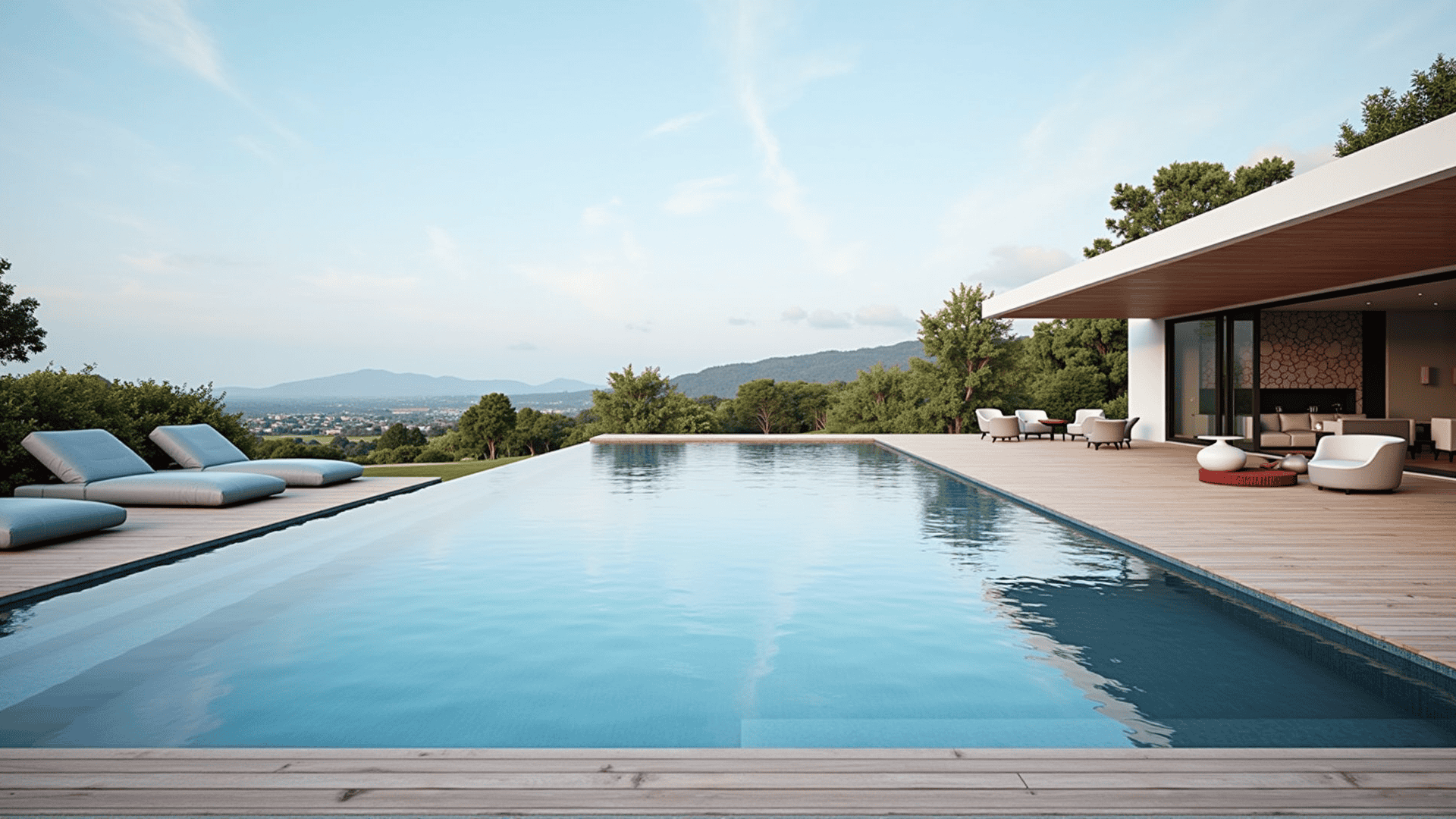
I've learned through years of building pools that excitement can quickly turn to disappointment if we skip the most crucial step: making sure your structure can actually support a rooftop pool. Let me walk you through what we need to consider before your dream pool becomes a reality.
Weight Distribution Requirements
Water is deceptively heavy. Think about this: a modest 12' x 24' pool that's just 4 feet deep contains around 8,600 gallons of water. That translates to over 70,000 pounds the equivalent of parking about 20 mid-sized cars on your roof. And that's before we add decking materials, furniture, and people.
I once had a client who couldn't understand why their detached garage needed significant reinforcement for a small plunge pool. I asked them to imagine stacking their entire living room furniture, family members, and then filling the room with water. The mental image quickly clarified the structural challenge!
Building Structure Assessment

Before we draw a single design, we'll bring in a structural engineer to evaluate your existing structure. This isn't an area where cutting corners saves money—quite the opposite. The assessment typically includes:
- Analysis of foundation capacity
- Evaluation of load-bearing walls
- Verification of beam and joist strength
- Review of existing waterproofing systems
One of the most common issues I encounter is homeowners with flat roofs who assume they're already designed to hold significant weight. While flat roofs are indeed built to handle snow loads and occasional maintenance traffic, a pool represents a constant, concentrated load that's typically 5-10 times heavier.
Reinforcement Options
In most cases, your existing structure will need reinforcement. This might include:
- Steel beam installation: Adding support directly beneath the pool area
- Column additions: Extending support from foundation through to the roof
- Load-spreading designs: Distributing weight across a larger footprint
- Foundation strengthening: Ensuring your home's base can handle the increased load
I like to be transparent with my clients—these modifications can add 15-30% to your overall project cost, but they're absolutely essential for safety and longevity.
Waterproofing Systems
A leak in a backyard pool is inconvenient. A leak in a rooftop pool can be catastrophic. We typically implement multiple redundant waterproofing layers, including:
- Primary pool shell waterproofing
- Secondary containment systems
- Moisture detection technology
- Proper drainage solutions
Think of waterproofing like insurance—it might seem excessive when installed, but you'll never regret having comprehensive protection.
Vibration Control
One often-overlooked consideration is vibration. Water movement creates vibrations that can transfer through your structure, creating unexpected noise or comfort issues. We use isolation techniques similar to those in luxury high-rise buildings to ensure your pool doesn't sound like thunder to the rooms below.
The structural phase may not be the most exciting part of pool planning, but it's the foundation (literally) of a successful project. Get this right, and your rooftop oasis will provide decades of enjoyment rather than becoming a cautionary tale at neighborhood barbecues.
Materials and Construction Methods
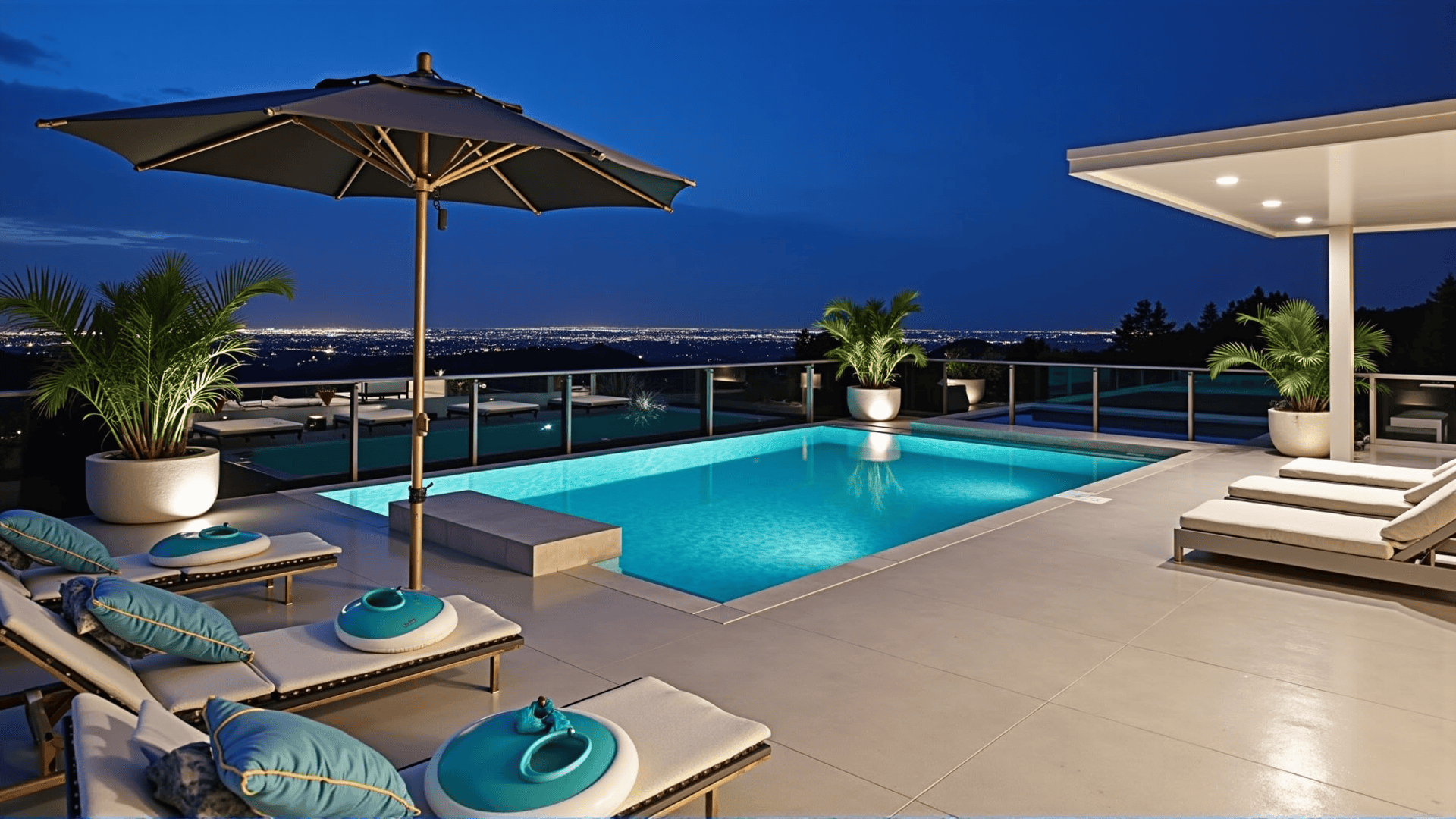
Building a rooftop pool is fundamentally different from installing a traditional backyard pool—it's like comparing aerospace engineering to road construction. Both get you from point A to point B, but the considerations and materials are worlds apart. Let me share what I've learned after decades of specialized pool construction.
Stainless Steel vs. Traditional Concrete
When I first started building rooftop pools, most clients assumed we'd use the same concrete methods as ground-level pools. But here's the reality: concrete pools are incredibly heavy—about three times heavier than their stainless steel counterparts.
Stainless steel has become my go-to material for rooftop installations. Beyond being significantly lighter, steel pools offer:
- Superior durability against building movement and vibration
- Faster installation time (typically weeks rather than months)
- Better leak prevention with fully welded seams
- Longer lifespan with proper maintenance

I remember one project where the client insisted on concrete for aesthetic reasons. After reviewing the structural requirements, they were shocked to learn the reinforcement costs would nearly double their budget. They happily switched to a stainless steel design with a decorative interior finish that achieved their desired look without the structural headache.
Prefabricated Panel Systems
Another innovation that's revolutionized rooftop pool construction is the use of prefabricated panel systems. These modular components are:
- Manufactured off-site to precise specifications
- Transported and assembled on your rooftop
- Significantly faster to install than traditional methods
- Quality-controlled in factory conditions rather than on-site
Think of it like building with sophisticated LEGO pieces rather than starting from scratch with raw materials. The precision and consistency are unmatched.
Waterproof Membranes and Liners
When it comes to waterproofing a rooftop pool, we don't just need good—we need perfect. A tiny leak in a backyard pool means a wet spot on your lawn; a small leak in a rooftop pool can mean catastrophic damage to your home's interior.
I approach waterproofing with redundant systems:
- Primary waterproofing within the pool structure itself
- Secondary containment beneath and around the pool
- Detection systems that alert you to potential issues before they become disasters
I'll never forget a consultation where I showed a potential client the multiple waterproofing layers we implement. "Isn't that overkill?" they asked. My response was simple: "Would you prefer we underkill it?" They appreciated the point.
Lightweight Composite Materials
The aerospace industry has provided us with incredible materials that are making their way into high-end pool construction. Composite shells made from carbon fiber and specialized resins offer:
- Dramatically reduced weight
- Superior strength-to-weight ratios
- Excellent thermal insulation (reducing heating costs)
- Resistance to chemicals and UV degradation
While these materials come at a premium, they're ideal for complex rooftop installations where every pound matters and conventional approaches won't suffice.
The materials and methods we choose for your rooftop pool aren't just technical decisions—they're the foundation of creating a safe, durable, and beautiful addition to your home that will provide enjoyment for decades.
Design Elements That Make a Difference

After three decades of building pools, I've come to understand that the difference between a "nice pool" and a "breathtaking retreat" lies in the design details. This is especially true for rooftop pools, where the unique setting demands thoughtful integration of elements that complement both your lifestyle and the elevated environment.
Integrating Surrounding Landscape Elements
One of the biggest mistakes I see in rooftop pool design is treating the pool as an isolated feature. The most successful installations feel like natural extensions of your living space.
Consider strategic landscaping with:
- Container plantings that provide privacy and shade
- Vertical gardens that soften structural elements
- Wind-resistant plants specifically selected for rooftop conditions

I once worked with a family who initially wanted just a pool, nothing else. After discussing their lifestyle, we incorporated a small herb garden adjacent to their pool area. Now they pluck fresh mint for mojitos while enjoying evening swims—a small detail that completely transformed how they use the space.
Lighting Systems for Nighttime Ambiance
Lighting transforms your rooftop pool from a daytime-only amenity to a 24-hour experience. Unlike ground-level pools, rooftop installations can leverage both:
- Architectural lighting that highlights the pool's relationship to your home
- Ambient lighting that creates mood and extends usability
- Smart systems that allow you to change color schemes and intensity
The right lighting design doesn't just illuminate—it creates an entirely different experience after sunset. I recommend LED systems that can transition from practical brightness for evening swims to subtle mood lighting for entertaining.
Incorporating Lounging Areas and Water Features
Your pool is rarely just about swimming—it's about creating a complete environment. Consider:
- Built-in seating that maximizes limited rooftop space
- Partially submerged ledges for cooling off without full immersion
- Water features that mask urban noise with soothing sounds
Transform Your Home with Elite Los Angeles Pool Builder: I've found that integrated design elements dramatically increase how frequently homeowners actually use their pools. A client once told me, "I thought we'd swim occasionally, but we find ourselves having coffee by the pool every morning because the space is so comfortable."
Views and Privacy Considerations
Rooftop pools offer unique opportunities for views, but also unique challenges for privacy. Smart design addresses both:
- Strategic orientation that maximizes desirable views
- Pergolas or partial walls that create privacy without blocking vistas
- Adjustable elements like retractable screens or canopies
I always walk the entire perimeter of a proposed pool area with clients, noting what's visible from each angle. This exercise often reveals both unexpected view opportunities and privacy concerns that inform the final design.
The most successful rooftop pools aren't just attractive water features—they're thoughtfully designed environments that reflect how you live. When considering design elements, think beyond aesthetics to how each choice will enhance your actual experience. The right design transforms a simple pool into your favorite place at home.
Safety Measures for Elevated Pools
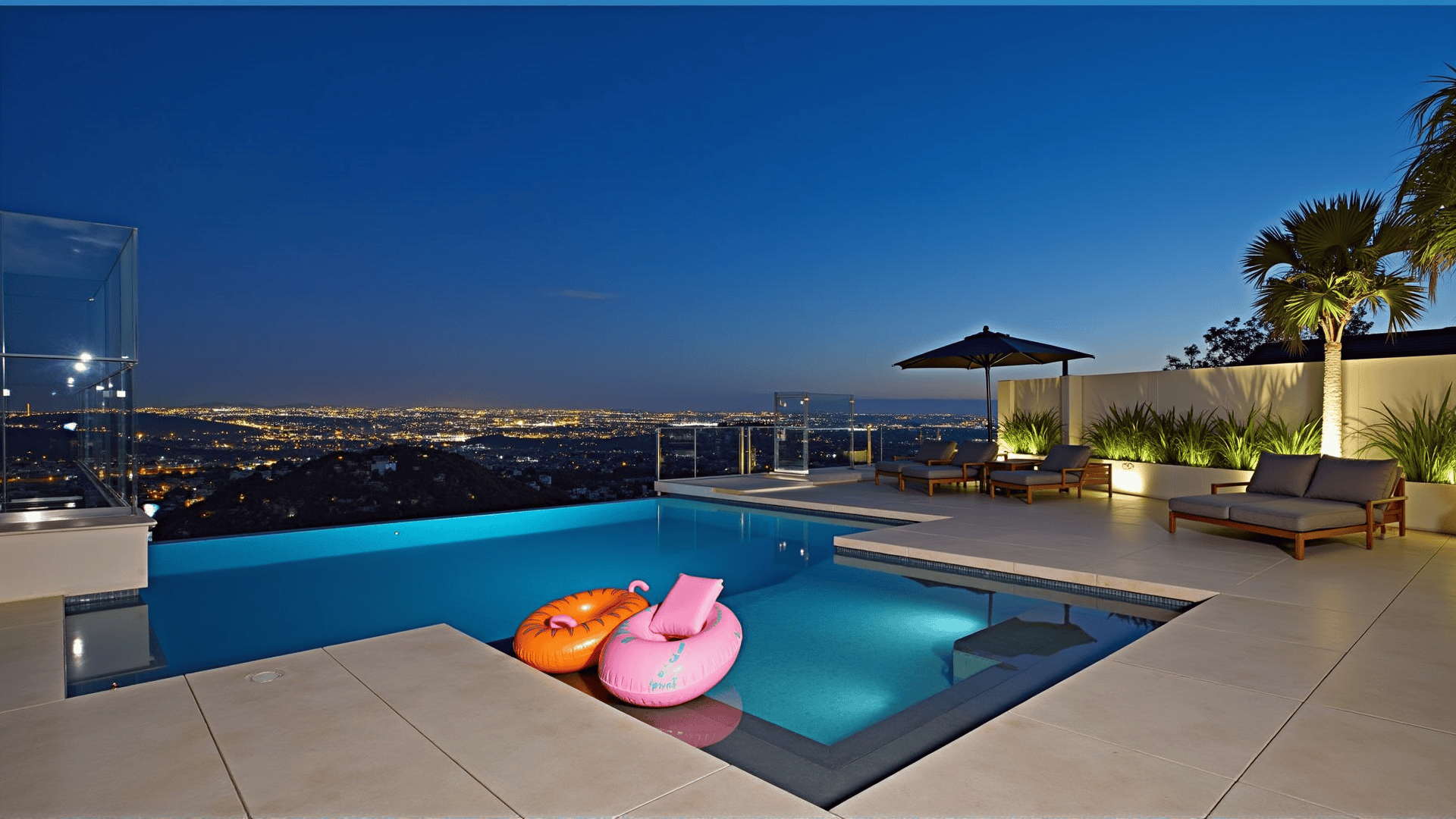
I've built pools for nearly twenty years, and if there's one thing I've learned, it's that safety isn't just another checkbox—it's the foundation everything else is built upon. With rooftop pools, we're adding a whole new dimension to safety considerations, quite literally. Let me share what experience has taught me about keeping your elevated oasis secure.
Barriers, Fencing, and Access Control
Ground-level pools need barriers; rooftop pools demand them. Local codes typically require 48-60 inch barriers around any pool, but for rooftop installations, I recommend going beyond minimum requirements.
Consider these options:
- Glass barriers that maintain views while providing protection
- Self-closing, self-latching gates with alarms
- Keypad or smart-lock access that prevents unauthorized use
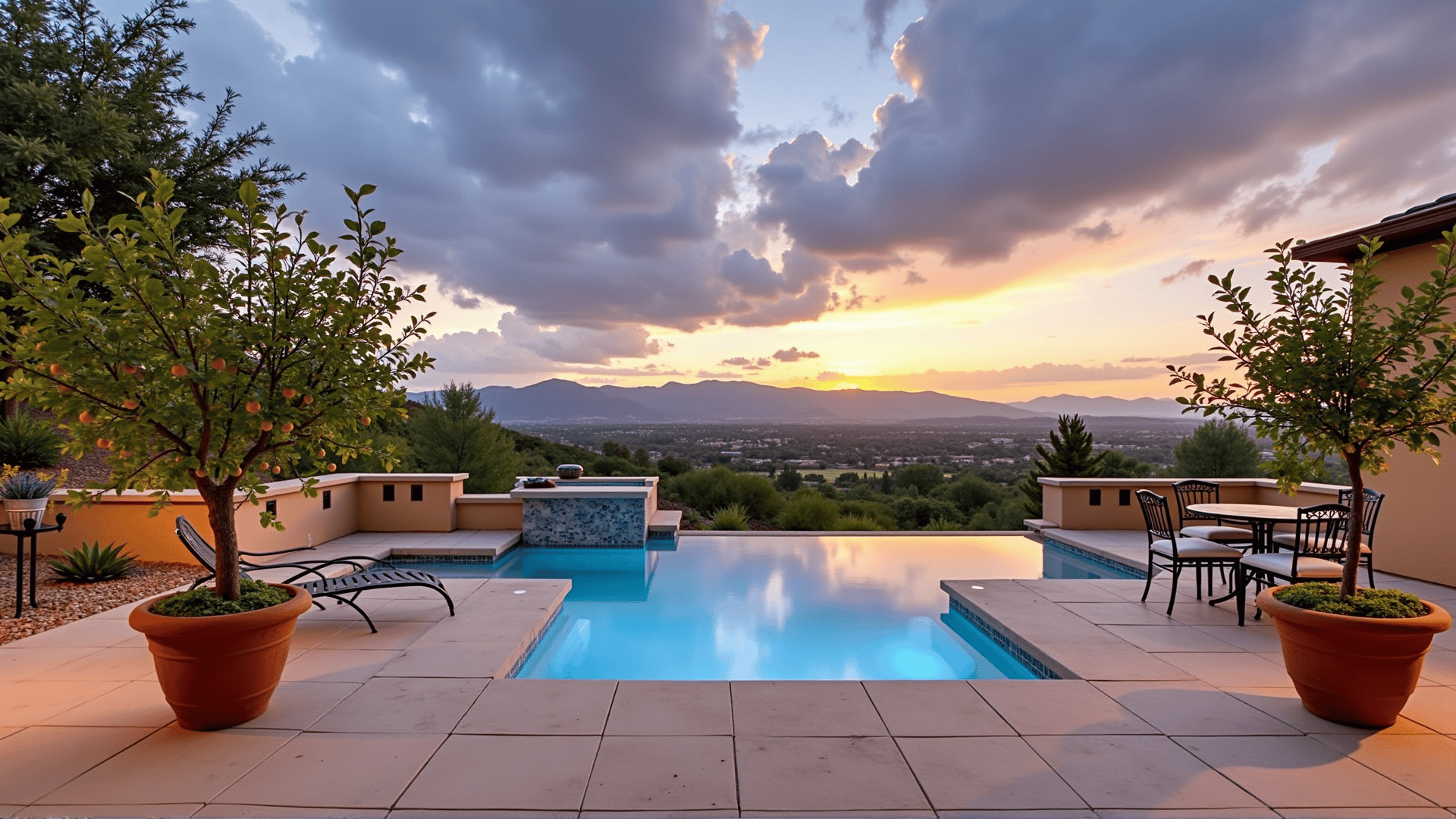
I once had a client who initially balked at the glass barrier recommendation, concerned it would obstruct their cityscape view. After installation, they called to thank me—not only did the barrier provide crucial safety, but the frameless design actually enhanced the visual experience by creating a contained infinity effect.
Non-Slip Surfaces Around Pool Areas
Water plus smooth surfaces equals danger, and this equation becomes even more critical on a rooftop. I insist on:
- Textured deck materials that provide traction when wet
- Proper drainage slopes to minimize standing water
- Heat-reflective surfaces that remain comfortable underfoot on hot days
There's a balance to strike between aesthetics and safety. Modern materials allow us to achieve both—creating surfaces that look beautiful while offering superior slip resistance. Your bare feet will thank you, and more importantly, so will your family's safety record.
Proper Drainage Systems for Overflow
Rooftop pools require sophisticated drainage solutions for both:
- Normal operation (splashing, backwashing, cleaning)
- Emergency overflow (heavy rain, system malfunctions)
Without proper planning, a minor overflow could damage your home's interior or create dangerous pooling on weight-sensitive areas of your roof.
I design multi-tiered drainage systems with redundant fail-safes. Think of it like having not just a primary drainage system, but a backup to the backup. It's an approach I developed after witnessing the aftermath of a poorly designed system during a particularly heavy storm. That experience taught me that when it comes to water management, paranoia is actually prudence.
Wind Exposure Considerations
Ground-level pools are sheltered; rooftop pools face the full force of nature. Higher elevations mean:
- Stronger wind conditions affecting comfort and safety
- Increased water evaporation and heat loss
- Greater potential for debris being blown into the pool
We address these challenges through strategic orientation, windbreak features, and specialized equipment selection. Something as simple as the direction your pool faces can dramatically impact both safety and enjoyment.
Safety measures might not be the most exciting part of planning your rooftop pool, but they're undoubtedly the most important. The good news? With thoughtful design, these necessary elements integrate seamlessly into your overall concept, providing protection without compromising the luxury experience you're creating.
Weatherproofing Your Rooftop Pool
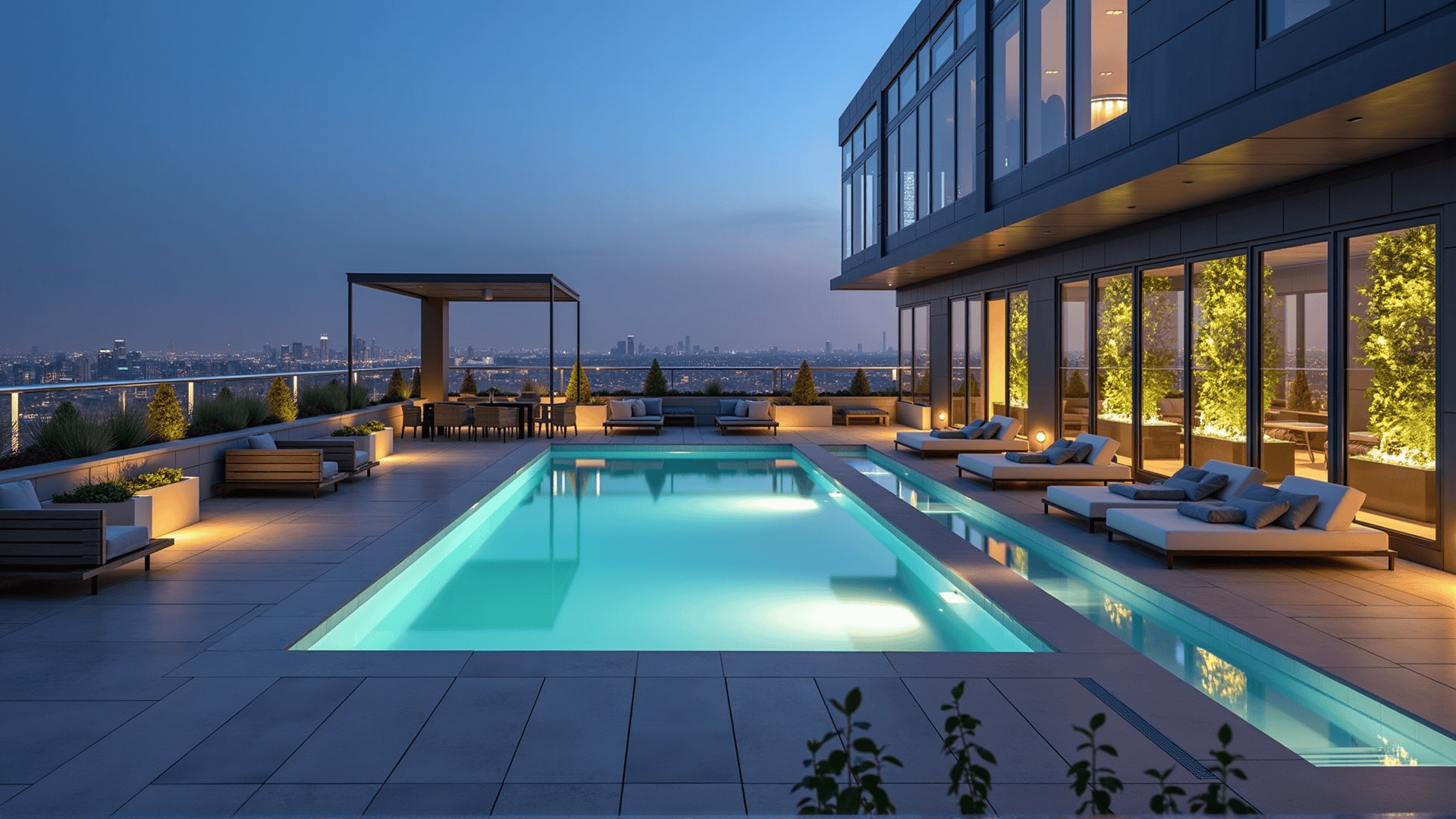
In my years of building custom pools, I've learned that Mother Nature doesn't care how beautiful your rooftop oasis is—she'll test it with everything she's got. Unlike backyard pools that benefit from natural windbreaks and surrounding structures, rooftop pools are fully exposed to the elements. Proper weatherproofing isn't just a nice to have; it's essential for getting the most from your investment.
Retractable Covers for Year-Round Enjoyment
I remember visiting a client's rooftop pool in January—a time when most pools sit unused in our region. Yet there they were, enjoying a comfortable swim while snow dusted the cover overhead. That's the magic of modern retractable enclosures.

Today's options include:
- Telescopic enclosures that fully retract in good weather
- Partial covers that shield just the pool surface
- Motorized systems that open or close with the touch of a button
Beyond extending your swimming season, these covers provide significant energy savings by reducing heat loss and evaporation. One family I worked with calculated that their retractable cover paid for itself in just under three years through reduced heating costs alone.
Heating Systems for Temperature Control
Rooftop pools cool faster than ground-level pools due to increased wind exposure and radiation to the night sky. To combat this, I recommend:
- High-efficiency heat pumps specifically sized for rooftop conditions
- Solar heating options that capitalize on the excellent sun exposure rooftops typically receive
- Automated temperature management that maintains your preferred settings
I've found that rooftop pools benefit tremendously from smart heating systems that can respond to weather forecasts. Why heat your pool all day if a cold front is coming through tonight? Modern systems can make these adjustments automatically.
Protection Against Extreme Weather Conditions
Your rooftop pool will face weather extremes that ground-level pools simply don't experience:
- Higher wind velocities that accelerate evaporation and cooling
- Direct exposure to heavy rain, hail, and snow
- Temperature fluctuations without the moderating influence of surrounding earth
In designing a robust system, I focus on:
- Wind-resistant features like partially recessed designs or strategic windbreaks
- Heavy-duty components rated for extreme conditions
- Automatic water level controllers that compensate for increased evaporation
After seeing a poorly designed rooftop pool freeze and crack during an unexpected cold snap, I'm particularly attentive to freeze protection systems for elevated installations—even in milder climates.
Thermal Building Envelope Considerations
The interface between your pool and the building structure requires special attention. Think of it as creating a thermal envelope that:
- Prevents condensation inside your building
- Minimizes heat transfer between pool and interior spaces
- Uses moisture-resistant materials at all transition points
The technical details may not be glamorous, but they're crucial to preventing the "sick building syndrome" that can result from improper moisture management.
Weatherproofing may seem like a substantial investment during the construction phase, but it's far more cost-effective than retrofitting solutions later. A well weather proofed rooftop pool isn't just more comfortable—it's more sustainable, more durable, and ultimately, more enjoyable throughout the changing seasons.
Maintenance Requirements
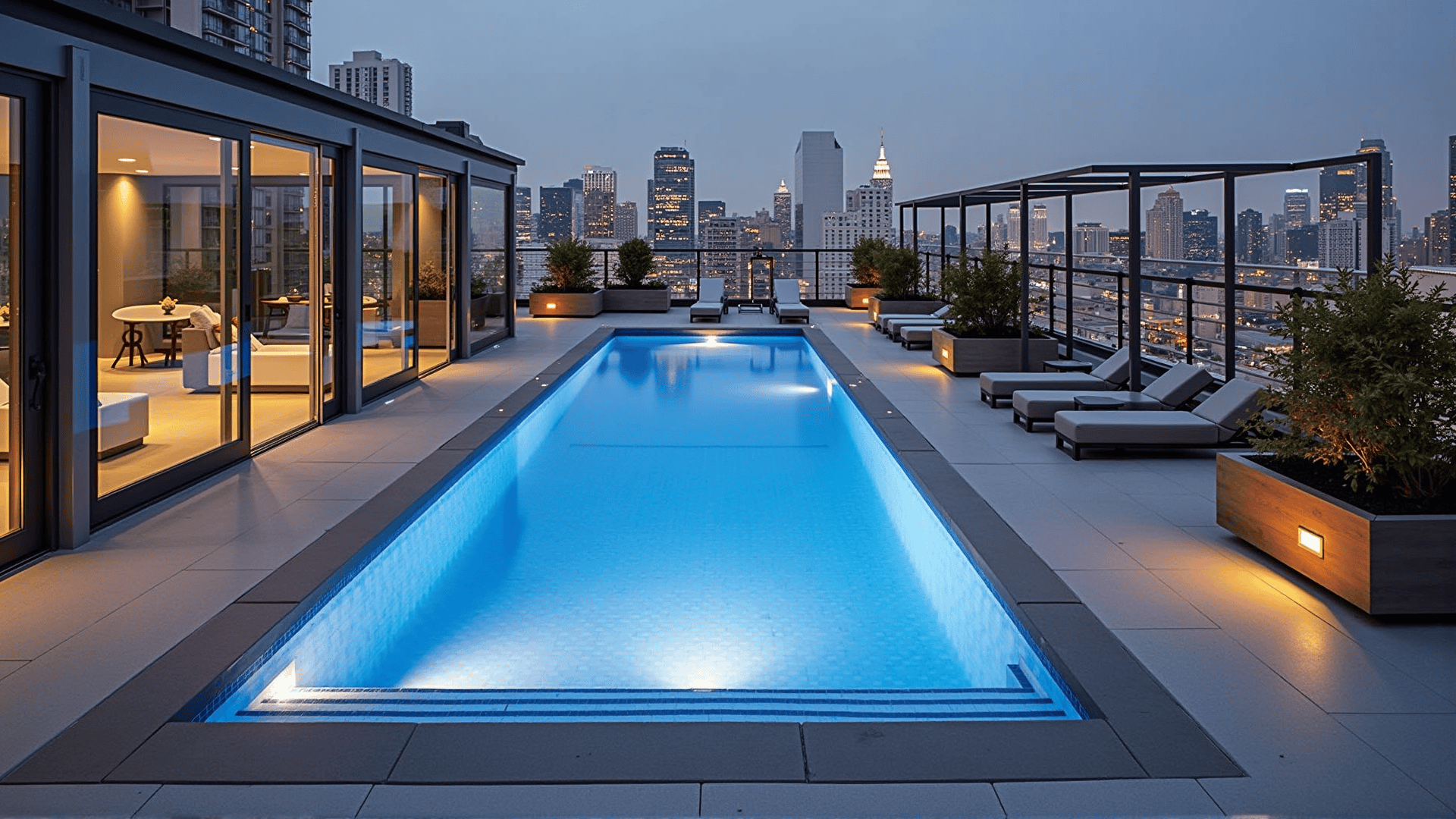

I've been in this business long enough to hear the same question hundreds of times: "How much maintenance will my rooftop pool need?" My answer is always the same slightly more than a ground-level pool, but with proper planning, it doesn't have to be burdensome. Let me walk you through what to expect.
Regular Inspection Schedules
Ground-level pools forgive small oversights. Rooftop pools? Not so much. Think of your rooftop pool like a luxury watch—regular maintenance prevents major repairs.
I recommend:
- Bi-annual structural inspections (spring and fall)
- Quarterly equipment checks by qualified technicians
- Monthly inspection of waterproofing elements
I learned the importance of this schedule the hard way early in my career. A small leak in a rooftop pool went undetected for months because the homeowner skipped their fall inspection. By spring, water had compromised not just the pool structure but also the room below. That $200 inspection would have saved them over $15,000 in repairs.
Water Chemistry Management
Rooftop pools have unique chemistry challenges due to:
- Higher evaporation rates concentrating chemicals faster
- More direct sun exposure breaking down chlorine more quickly
- Increased debris from wind affecting balance
For busy professionals, I strongly recommend:
- Automated chemical management systems
- Remote monitoring technology that alerts you to issues
- Regular professional service (usually weekly during swim season)
You wouldn't try to manage your retirement portfolio without checking it regularly. Pool chemistry requires the same consistent attention—small adjustments prevent major corrections.
Structural Integrity Checks
This is where rooftop pools differ most significantly from their ground-level counterparts. You need to monitor:
- Support structure integrity
- Waterproofing system performance
- Building interface points
- Signs of movement or settlement
I've developed a homeowner's checklist that helps identify early warning signs of structural issues. Simple visual inspections, like checking for new cracks in finishes or doors that suddenly don't close properly, can alert you to potential problems before they become serious.
Seasonal Maintenance Tasks
Each season brings specific maintenance needs:
Spring:
- Deep cleaning after winter closure
- System restart and equipment inspection
- Deck surface treatment and repair
Summer:
- Regular chemical balancing
- Filter maintenance
- Energy efficiency monitoring

Fall:
- Preparation for reduced use or closure
- Drainage system cleaning
- Weatherproofing check
Winter:
- Freeze protection verification
- Cover system maintenance
- Structural monitoring during freeze/thaw cycles
A homeowner once told me maintaining their rooftop pool was like caring for a garden—a little regular attention yields beautiful results, but neglect leads to a compounding mess.
Modern technology has made maintenance far easier than it was even a decade ago. Remote monitoring, automatic chemical feeders, and smart systems can handle much of the daily work. But the importance of regular professional inspections can't be overstated—especially for the structural elements unique to rooftop installations. With the right maintenance routine, your rooftop pool will remain a source of enjoyment rather than frustration for years to come.
Cost Considerations

Let's have an honest conversation about money. In my years of building custom pools, I've found that homeowners appreciate straight talk about costs more than any other aspect of the project. So here's the unvarnished truth: rooftop pools cost more than their ground-level counterparts—typically 30-50% more. But understanding where those costs come from helps you make informed decisions about your investment.
Initial Construction Expenses
The price tag for a rooftop pool starts with the same factors as any pool:
- Size and depth
- Materials and finishes
- Equipment quality
- Added features (lighting, heating, automation)
But then we add rooftop-specific factors:
- Structural reinforcement of the existing building
- Specialized waterproofing systems
- Complex access requirements for construction
- Lightweight materials that may cost more than standard options
I once worked with a family who was shocked by their initial quote. When we broke down the costs, they realized that nearly 35% was allocated to structural reinforcement and waterproofing—elements that wouldn't be necessary for a ground-level pool but were absolutely essential for their rooftop installation. We found ways to adjust some design elements while maintaining these critical infrastructure components.
Structural Engineering Requirements
This is not a place to cut corners. Professional engineering services typically run $3,000-$10,000 for a rooftop pool project, depending on complexity. This includes:
- Structural analysis
- Load calculations
- Design of reinforcement systems
- Waterproofing specifications
Think of this expense like an insurance policy—it's protecting your entire home, not just your pool. I've seen the devastating consequences when homeowners tried to save money by skipping proper engineering. One particularly memorable case involved a pool installed without adequate structural support that began to show signs of failure within months. The repair costs were more than double what proper engineering would have cost initially.
Insurance Implications
Expect your homeowner's insurance to increase with a rooftop pool addition. Insurance companies understand the potential risks, including:

- Water damage to the building's interior
- Structural issues from added weight
- Increased liability exposure
I recommend consulting your insurance agent during the planning phase. Some carriers offer discounts for specific safety features or construction methods, which can help offset premium increases.
Long-Term Maintenance Costs vs. Traditional Pools
The annual operating costs for rooftop pools typically run 15-25% higher than ground-level pools due to:
- More frequent professional inspections
- Higher heating costs due to increased exposure
- Specialized equipment maintenance
- More complex winterization in seasonal climates
However, many homeowners find that increased property value and lifestyle enhancement easily justify these additional costs. When budgeting for your rooftop pool, I recommend allocating 10-15% beyond your initial estimate for unexpected contingencies. Building on an existing structure almost always reveals surprises that weren't apparent during planning.
A rooftop pool represents a significant investment, but for many homeowners, the unique experience and property value enhancement make it worthwhile. With proper planning and realistic budgeting, you'll be prepared to make informed decisions about this luxurious addition to your home.
Is a Rooftop Pool Right for You?
After 48 years of transforming ordinary spaces into extraordinary aquatic retreats, we've seen firsthand how rooftop pools can revolutionize a home. These elevated oases aren't just pools—they're lifestyle enhancements that maximize your property's potential in ways traditional pools simply cannot.
The journey from concept to completion requires specialized expertise. From structural engineering to material selection, waterproofing to weatherproofing, each decision requires the guidance of professionals who understand the unique challenges of rooftop installations.
Is a rooftop pool right for you? If you value:
- Making the most of limited urban space
- Creating a truly distinctive home feature
- Enhancing your property's value
- Enjoying unparalleled views while you swim
Then the answer is likely yes—provided you partner with a team that brings decades of specialized experience to your project.
At Designer Custom Pools, we've refined our approach through thousands of successful installations. Our comprehensive process ensures your rooftop retreat will be structurally sound, aesthetically stunning, and built to last.
Ready to explore how a rooftop pool could transform your home? Contact us today at (310) 261-2440 or visit our contact page to schedule a consultation. Let's turn your elevated dreams into reality.