Plunge Pool or Paradise? Small Backyard vs. Large Format Pools - Choosing Your Perfect Water Feature
The comprehensive comparison between small backyard and large format pools reveals distinct advantages and considerations for each option. Small backyard pools (typically under 600 sq ft) offer efficiency in limited spaces, lower installation costs ($20K-$50K for fiberglass/vinyl vs. $55K-$100K for concrete), reduced maintenance demands (1-2 hours/week), and significantly lower operational expenses for chemicals, heating, and water replacement. They're ideal for relaxation, intimate gatherings, and when paired with features like swim jets, can provide effective exercise options.
Large format pools (400-800 sq ft) deliver versatility for multiple simultaneous activities, accommodate larger gatherings (30+ people), and offer extensive customization possibilities including varied depths, waterfalls, and diving features. However, they require substantial space (dominating the yard), higher installation investments ($50K-$100K+), more intensive maintenance (3-5 hours/week), and greater resource consumption across water, chemicals, and energy.
The article "Plunge Pool or Paradise? Small Backyard vs. Large Format Pools - Choosing Your Perfect Water Feature" addresses this fundamental choice between intimate luxury and expansive recreation. The decision ultimately hinges on matching your pool to your specific lifestyle needs, space constraints, and maintenance preferences rather than simply pursuing maximum size. With 48 years of experience transforming backyards of every dimension, Designer Custom Pools can help you navigate these options to create your ideal aquatic retreat, regardless of your yard size.
Size Considerations & Space Requirements: Finding the Perfect Pool for Your Backyard

When it comes to building a custom pool, one of the first decisions you'll face is size. As someone who's been designing and building pools for over two decades, I can tell you that "How big should my pool be?" is usually the first question clients ask—and it's one of the most important.
Small Backyard Pools: Maximizing Limited Space
Small backyard pools are having quite the moment, and for good reason. Last summer, I worked with a couple in a downtown neighborhood who had a yard barely 400 square feet. They were convinced a pool wasn't possible until we designed a gorgeous 10'x16' plunge pool that transformed their tiny courtyard into a luxury retreat.
These compact gems typically measure under 600 square feet—think dimensions like 10'x20', 12'x24', or even smaller cocktail pools at 8'x12'. The beauty of small pools is their versatility. I've installed them in yards as compact as 200 square feet, and they work wonderfully in urban settings where every inch counts.
A critical rule of thumb: small pools should use no more than one-third of your available yard space. This preserves room for decking, lounging areas, and landscaping. You'll also need to maintain a minimum clearance of 2-3 feet around the perimeter for maintenance access and safety.
I'll never forget working with a family who insisted on squeezing a pool into a tiny corner of their yard with zero clearance on one side. Six months later, when their pump needed replacing, they had to partially demolish a garden wall because there was no access. Lesson learned—those clearance requirements aren't just suggestions!
Large Format Pools: When Space Allows for Luxury
On the opposite end of the spectrum are large format pools, which typically range from 400-800 square feet (dimensions like 16'x32' or 20'x40'). These statement pools become the centerpiece of your outdoor living space.
Last year, I designed a 20'x40' pool for a client with a sprawling backyard who hosts regular family gatherings. With five grandchildren who visit weekly, the larger format gives everyone room to play without crowding. The deep end (8.5') allows for safe diving, while the shallow end accommodates the little ones.
Large pools typically require more generous setbacks—often at least 10 feet from house walls and property lines—and they generally dominate the yard. Before committing to a large pool, consider how much remaining space you'll want for other outdoor activities. In my experience, many clients initially request the largest possible pool, only to scale back once they realize how little yard space will remain.
Finding Your Perfect Fit: Practical Considerations
When determining the right pool size for your property, consider:

Available Space: Measure your entire yard, then subtract setbacks required by local codes (typically 5-10 feet from property lines and structures). Also account for existing features you want to preserve, like mature trees or patios.
Intended Use: A family with teenagers who love water volleyball needs more space than a couple seeking a quiet spot to cool off. Be honest about how you'll use the pool most often.
Depth Requirements: If diving is important, you'll need a pool at least 8.5' deep with an adequate diving envelope. Without diving, you can opt for a more consistent depth of 3.5'-5.5', which is more energy-efficient and safer for general use.
Future Plans: I always ask clients about their five-year plan. If teenagers will soon leave for college or if grandchildren are in the near future, these factors might influence your size decision.
One of my favorite projects was for a client with a medium-sized yard who couldn't decide between a larger pool or more patio space. We ultimately designed a 14'x28' pool (on the smaller side of medium) with an expanded tanning ledge and integrated spa. This compromise gave them the water features they wanted while preserving ample space for their outdoor kitchen and fire pit area. Five years later, they tell me it's the perfect balance.
Whether you're working with a compact urban lot or a sprawling suburban backyard, there's an ideal pool size waiting to transform your outdoor living space. The key is finding the right balance between your dream pool and your available space—something we specialize in at Designer Custom Pools.
Innovative Designs by Trend-Setting Los Angeles Pool Builder: Remember, the perfect pool isn't about maximizing water volume—it's about maximizing your enjoyment of the space for years to come.
Functionality & Usage Benefits: Maximizing Enjoyment in Any Pool Size

As someone who's been designing and building pools for over two decades, I can tell you that one of the most overlooked aspects of pool planning is how you'll actually use your aquatic retreat. Size certainly matters—but functionality matters more. Whether you're working with a compact urban lot or a sprawling suburban estate, understanding how your pool will serve your lifestyle is essential.
Small Backyard Pools: Intimate Luxury & Focused Functionality
Small pools pack a surprising punch in the functionality department. When I meet with clients who have limited space, I often find they're pleasantly surprised by how much utility we can build into a compact design.
Perfect for Relaxation & Intimate Gathering
The beauty of a small pool—typically under 600 sq ft—is its natural ability to create an intimate setting. I worked with a doctor and her husband last year who wanted a space to unwind after long hospital shifts. We designed a 12'x20' plunge pool with built-in seating areas and underwater LED lighting. It's become their evening ritual to enjoy a glass of wine while partially submerged on the tanning ledge, watching the sunset. The smaller scale creates a cozy, spa-like retreat rather than an overwhelming expanse of water.

Small pools excel at hosting intimate gatherings—think 4-8 adults comfortably enjoying the water simultaneously. I generally calculate about 15 square feet per person in the pool, so a 10'x16' pool can comfortably fit 8-10 people without feeling cramped.
Hydrotherapy & Wellness Benefits
One of my favorite small pool designs incorporated powerful therapy jets along a bench seat for a client recovering from back surgery. With the compact size, heating the water to the perfect therapeutic temperature is both quick and economical. The pool became his at-home physical therapy center, and his recovery progressed faster than even his doctors expected.
Small pools can be equipped with swim jets, resistance systems, and tethers, effectively transforming them into aquatic gyms. I had a client—a former collegiate swimmer—who insisted she needed a 40-foot lap pool until we demonstrated how a swim tether in a 16-foot plunge pool could provide an even more rigorous workout by creating constant resistance.
Safety & Supervision Benefits
Parents consistently tell me that one unexpected benefit of smaller pools is the enhanced safety aspect. With less water surface to scan, supervising children becomes significantly easier. The more contained environment means you can keep a watchful eye on everyone from nearly any vantage point around the pool.
Large Format Pools: Versatility & Entertainment Value
When space allows, large format pools offer a different kind of functionality that centers around versatility and simultaneous activities.
Designed for Active Recreation & Multiple Users
Large pools (typically 400-800 sq ft) shine when it comes to active use. Last summer, I completed a 20'x40' pool for a family with three teenage boys. Within minutes of filling it, they had a volleyball net stretched across the middle and were engaged in a spirited game with neighborhood friends—something simply not possible in a smaller format.
The beauty of a larger pool is zone functionality—different areas can serve different purposes simultaneously. While parents swim laps in one section, children can play in the shallow end, and grandparents can relax on the tanning ledge—all without interfering with each other's enjoyment.
Entertaining on a Larger Scale
If your lifestyle includes frequent entertaining, a large pool delivers unmatched flexibility. I've designed pools for clients who regularly host gatherings of 30+ people, creating spaces where adults can converse in seating clusters around the pool while children enjoy the water.

A client recently hosted her daughter's graduation party at their new 18'x36' pool. She told me afterward that having the larger format allowed her to create activity stations around the pool—dining on the deck, a lounging area for conversation, and plenty of space in the water for those who wanted to swim—without any area feeling congested.
Enhanced Swimming & Exercise Options
For serious swimmers, nothing beats the uninterrupted lane space of a large pool. I've had athletic clients who swim daily for fitness, and they consistently report that having that straight 30-40 foot stretch makes all the difference in their exercise routine.
Deeper water sections (typically 5.5' to 6.5') in larger pools also support a broader range of aquatic exercises, from water aerobics to resistance training. The varied depths create opportunities for progression in water-based therapy and exercise programs.
Making the Right Choice for Your Family
When advising clients, I always start with lifestyle questions rather than yard measurements. How do you envision using your pool most often? Who will the primary users be? How important is entertaining versus personal relaxation?
A young professional couple I worked with had sufficient space for a large pool but opted for a smaller "cocktail pool" with an adjacent spacious deck area. They recognized that their lifestyle centered more around occasional entertaining than daily swimming, and the smaller water feature with larger social space perfectly matched their needs.
Conversely, a family with competitive swimmers chose to maximize their available space with a 16'x32' pool, sacrificing some patio area to ensure their children had adequate training space.
Remember that water is only one component of your outdoor living space. Sometimes, opting for a smaller pool allows for more functional dry areas—outdoor kitchens, fire features, dining spaces—that complement your aquatic experience.
Whatever size you choose, today's pool technology offers incredible flexibility to maximize functionality. From swim jets that transform small pools into endless swimming lanes to sophisticated heating systems that extend your season, the possibilities for creating your perfect aquatic retreat are virtually limitless.
Discover Hidden Gems Among Los Angeles Pool Contractors: The perfect pool isn't about maximum volume—it's about matching your water feature to your lifestyle, creating a space where your family will create memories for years to come.
Design Options & Customization: Transforming Your Backyard Dream Into Reality

Having designed hundreds of pools over my Year career in the industry, I can tell you that the design phase is where the magic happens. It's where we translate your backyard dreams into concrete plans (sometimes literally!). Whether you're working with a cozy urban courtyard or a sprawling suburban landscape, the design options available today are more exciting than ever.
Small Backyard Pools: Maximum Impact in Minimal Space
The most rewarding projects I've worked on often involve small spaces. There's something deeply satisfying about transforming what a homeowner thought was an impossible space into their personal paradise.
Popular Shapes That Maximize Limited Space
For small yards, rectangular designs are unquestionably the most efficient use of space. I remember working with a couple in a historic neighborhood with just 14 feet of width to work with. By designing a sleek 10'x20' rectangular pool with clean lines, we created a sophisticated focal point that actually made their yard feel larger and more organized.
Freeform and curved designs, while sacrificing some water surface, often create more interesting spaces around the pool. Last summer, I designed a gentle kidney-shaped plunge pool (about 12'x18') for a family with an awkward corner lot. The curved design allowed us to tuck the pool perfectly into the angle of the property line, leaving just enough room for a small deck on one side and lush landscaping on the other.
For ultra-small spaces, circular and oval pools make geometric sense. They provide the maximum volume of water within the smallest perimeter, which means more swimming area and less expensive edging materials.
Space-Saving Features That Enhance Function
One of my favorite innovations for small pools is the built-in bench seat. Rather than taking up precious deck space with lounge chairs, we've been incorporating wide submerged benches along one side of the pool. These create perfect spots for adults to relax while keeping an eye on children, or for hosting intimate conversations during evening gatherings.
Tanning ledges (sometimes called Baja shelves) are another game-changer for small pools. Just last month, I completed a project with a 3'x8' tanning ledge in a 12'x20' pool. The homeowners, both busy professionals, told me it's become their favorite spot to decompress after work—just 4 inches of water to cool off while still enjoying a book or glass of wine.
Multi-functional design elements are essential in small spaces. We recently installed a raised bond beam on a compact pool that serves triple duty: it's a dramatic water feature with three small cascading waterfalls, provides a seating wall for poolside gatherings, and cleverly conceals the pool equipment behind it.
Creating Visual Impact in Limited Space
The reflective quality of water is your greatest ally in a small space. For a recent project in an urban setting, we selected a deep blue interior finish that created stunning reflections of the surrounding landscaping and evening lights. The homeowners regularly send me photos of how the pool transforms throughout the day as it catches different light angles.
Strategic lighting completely transforms small pools after dark. I've found that just two well-placed LED lights can create more drama and ambiance in a small pool than a dozen lights in a larger pool. The confined space allows the light to reflect more intensely, creating a jewel-like effect.
Vertical landscaping has become a signature element in my small pool designs. By drawing the eye upward with climbing plants, trellises, and tall grasses, we create the illusion of greater space while providing privacy from neighboring properties.
Large Format Pools: A Canvas for Creative Expression

Large pools offer an expansive canvas that allows for distinctive zones and dramatic design elements. They're perfect for homeowners who entertain frequently or have active families with diverse aquatic interests.
Diverse Design Possibilities
With large-format pools, geometric designs create a sense of order and architectural harmony. I recently completed a 20'x40' Grecian-style pool with formal symmetry that perfectly complemented the homeowner's colonial home. The clean lines and right angles created a timeless look that will never go out of style.
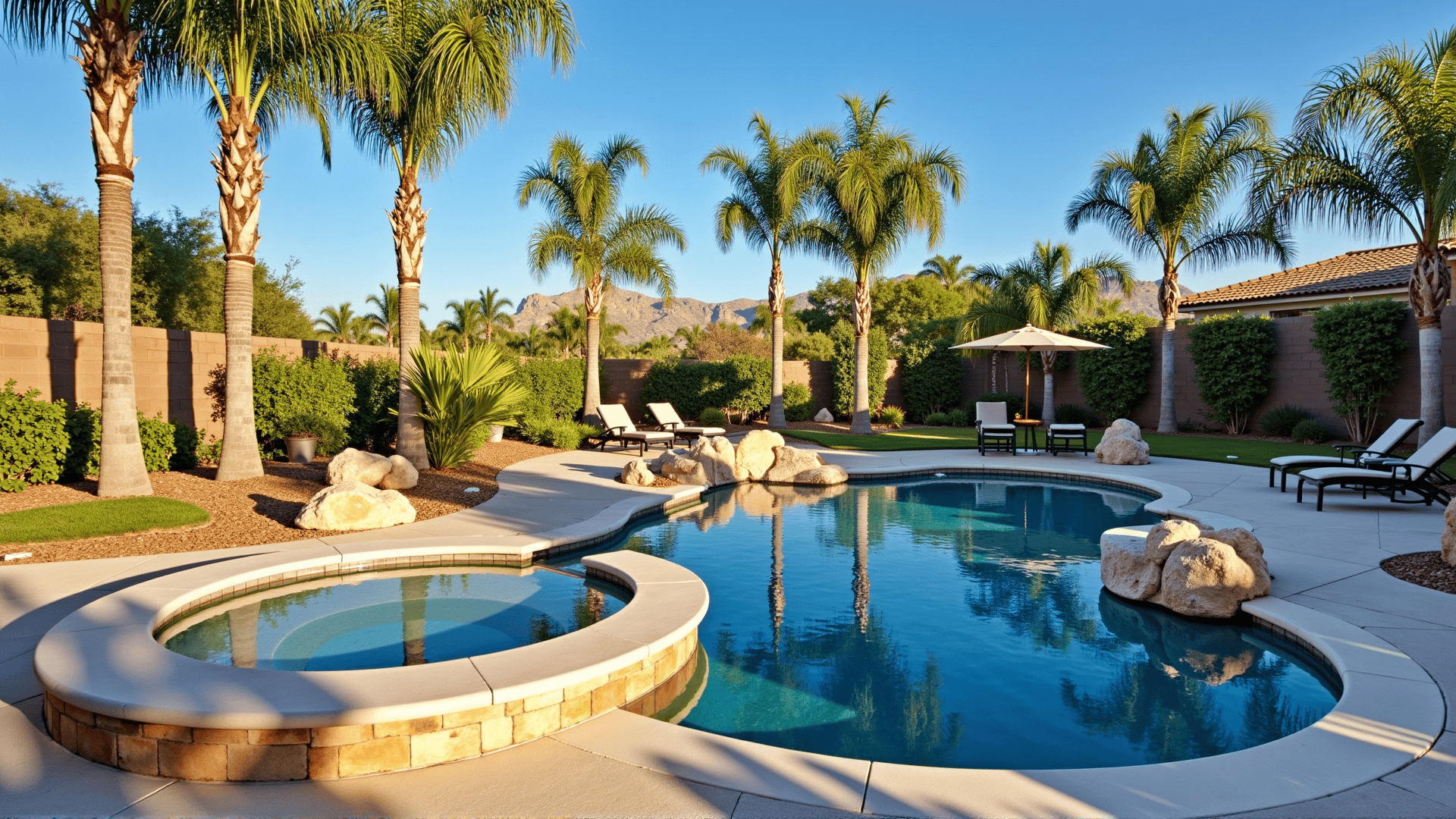
For more natural settings, freeform designs that mimic lakes or ponds can be breathtaking. One of my favorite recent projects involved a 25'x35' freeform pool nestled into a wooded lot. We contoured the edges to echo the surrounding landscape and incorporated large natural boulders that made the pool look as though it had always been there.
L-shaped designs have become increasingly popular for families wanting distinct activity zones. Last year, we designed an L-shaped pool where one leg (16'x30') was dedicated to swimming and play, while the shorter leg (15'x15') housed a massive sunken spa and tanning area. This allowed parents to relax while maintaining clear sightlines to children playing in the main pool area.
Enhanced Features for Multiple Activities
The beauty of large pools lies in their ability to incorporate multiple depth zones. A recent client—a family with teenage competitive swimmers and younger children—requested a pool that could accommodate serious training and playful splashing. We designed a 20'x40' pool with a consistent 4' depth along one side for the younger kids, transitioning to a 6' deep section for the teens to practice diving and underwater maneuvers.
When space allows, waterfall features create both visual and auditory pleasure. I'll never forget the reaction when we unveiled a 6' wide triple-cascade waterfall for a client who wanted the sensory experience of a resort pool. The sound of falling water transformed their backyard into a tranquil retreat while providing enough ambient noise to create privacy during conversations.
With sufficient space, swim-up bars and built-in tables have become popular requests. For a recent retiree couple who love entertaining, we designed a 6-person swim-up bar with submerged seating at the shallow end of their 18'x36' pool. They've since told me it's become the natural gathering spot during their famous weekend socials.
Creating Dramatic Focal Points
Large pools offer the possibility for true statement features like infinity edges. For a property with even a slight elevation change, an infinity edge creates a breathtaking visual connection to the horizon. I recently completed a project where the vanishing edge appeared to merge with a distant lake view, creating an optical illusion that never fails to impress visitors.
With greater space comes the opportunity for more elaborate landscaping integration. Stone waterfalls, rock grottos, and tropical plantings can transform a large pool into a resort-like environment. One of my clients, an avid tropical plant collector, worked with us to create a lagoon-style pool surrounded by rare palms and flowering plants that flourish in our climate zone.

Architectural elements like pergolas, pavilions, and outdoor kitchens naturally complement larger pool environments. These structures not only provide shade and functionality but also help to define different activity zones around the pool, creating a more dynamic and usable outdoor living space.
Choosing What’s Right for You
When sitting down with clients for the first design consultation, I always ask about their lifestyle first, before we even discuss size limitations. How do you envision using this space? Who will be the primary users? What memories do you want to create here?
For busy professionals with limited maintenance time, a small, elegant pool with automated features often provides the perfect balance of luxury and practicality. For growing families who host frequent gatherings, a larger format with varied activity zones might better serve their needs.
Regardless of size, today's technology allows for customization that was unimaginable just a decade ago. From smartphone-controlled lighting and heating to automated covers and chemical monitoring systems, both small and large pools can deliver a luxury experience tailored to your specific lifestyle.
The most successful pool designs—regardless of size—are those that authentically reflect the homeowner's vision while respecting the natural constraints of the space. Whether working with 200 square feet or 2,000, the goal remains the same: creating a personal aquatic retreat that enhances your daily life and becomes the heart of your outdoor living experience.
Cost & Financial Considerations: What You Need to Know Before Taking the Plunge

As someone who's designed and built thousands of pools over my year career, I've had countless conversations with homeowners about the "elephant in the room" - money. Whether you're considering a compact plunge pool or an expansive backyard oasis, understanding the financial implications is crucial to making a decision you won't regret.
The Upfront Investment: Small vs. Large Pools
The initial cost difference between small and large pools is substantial. For smaller backyard pools (typically under 600 sq ft), you're generally looking at:
- Fiberglass or vinyl options: $20,000-$50,000
- Custom concrete/gunite: $55,000-$100,000
I recently worked with a couple who were initially set on a large concrete pool until we ran the numbers. By opting for a beautifully designed 12'x24' fiberglass pool instead of their original 18'x36' concrete vision, they saved nearly $40,000 - money they redirected toward premium decking and a stunning outdoor kitchen.
For large format pools, the investment jumps significantly:
- Base installation: $50,000-$100,000+ depending on materials
- Additional features: Can easily push costs to $120,000-$150,000
What surprises many homeowners is that the price doesn't scale linearly with size. A pool that's twice as large doesn't cost twice as much - it's often only 30-40% more expensive. Why? Because certain fixed costs like excavation equipment, permits, and basic installation labor don't change dramatically with size.
The Hidden Costs: Ongoing Maintenance
Here's where the size difference really becomes apparent over time. With a smaller pool:
- Weekly maintenance: Typically 1-2 hours
- Chemical costs: Roughly 50-60% less than larger pools
- Energy bills: Significantly lower for heating and circulation
- Water costs: Less evaporation and cheaper to refill
I always tell my clients this story: Last summer, I visited two pools I'd built five years earlier - a 12'x24' plunge pool and a 20'x40' recreation pool. The plunge pool owner had spent about $800 that year on chemicals and maintenance supplies. The large pool owner? Nearly $2,100, plus they'd needed three service calls at $125 each.
For large format pools, you'll face:
- Higher ongoing maintenance: 3-5 hours weekly
- Increased utility costs: Larger pumps consume more electricity
- More chemicals: Greater volume requires more treatment
- More frequent repairs: More equipment means more to maintain
One pro tip I share with clients on a budget: Consider prioritizing size over luxury features when planning. It's easier to add water features or upgraded lighting later than it is to make your pool bigger. I've seen too many homeowners regret not going a few feet longer when they had the chance.
Return on Investment Considerations
Pools aren't typically pure financial investments, but they do impact your property value. A well-designed small pool can boost your home value by approximately 7%, according to recent real estate analyses I've seen. The key is appropriate sizing - a pool that overwhelms your yard can actually detract from value.
I've found the sweet spot is when your pool occupies no more than one-third of your available yard space. This preserves the balance between "water feature" and "usable outdoor living area" that future buyers find attractive.
For my clients planning to sell within 5-7 years, I often recommend smaller, more versatile pools that appeal to the broadest range of potential buyers. For those planning to stay 10+ years, I encourage them to focus on what will bring their family the most enjoyment rather than potential resale value.
Making the Smart Choice
When clients ask me about the most cost-effective pool decision, I often suggest they consider the "cost per swim" over a 10-year period. A family that uses a modest pool three times weekly will get far more value than one that rarely uses their showpiece pool due to maintenance demands.
Remember that pools, like most home improvements, aren't just financial decisions. They represent an investment in your family's lifestyle, health, and happiness. Finding the right balance between upfront costs, ongoing expenses, and the joy your pool will bring is the true art of making a wise pool investment.
Whether you choose a refreshing plunge pool that fits your urban courtyard or a sweeping resort-style pool for your suburban estate, understanding these financial considerations will help ensure your backyard oasis remains a source of pleasure - not financial stress - for years to come.
Maintenance & Efficiency: Small Backyard vs. Large Format Pools

After years designing custom pools for families across the country, I've noticed one question consistently rises to the surface late in the planning process: "Wait - how much work is this going to be?"
It's a great question, and one that deserves honest attention before you commit to either a small backyard pool or large format design. The maintenance reality of your future pool will significantly impact your enjoyment of it for years to come
Small Backyard Pools: The Low-Maintenance Option
There's something refreshingly straightforward about maintaining a small pool. With less surface area to clean and monitor, your weekly maintenance routine becomes notably more manageable.
Time Investment
A typical small backyard pool (under 600 sq ft) requires about 1-2 hours of maintenance per week. This includes skimming, vacuuming, checking chemical levels, and basic equipment inspection.

I remember working with a surgeon and his wife who specifically chose a 12'x24' pool because they calculated they could handle the entire maintenance routine during their Saturday morning coffee time. Two years later, they told me it had become their favorite shared ritual – 45 minutes of peaceful pool work while catching up on their week.
Chemical Usage
Small pools require significantly less chemical treatment to maintain proper water chemistry. The reduced water volume means less chlorine, pH adjusters, algaecides, and other treatments. For many of my environmentally-conscious clients, this reduced chemical footprint is a major selling point.
One client, an environmental science professor, calculated that her 10'x16' plunge pool used approximately 60% less chemicals annually than her neighbor's similar-styled 18'x36' pool. That's better for both the environment and your wallet.
Energy Efficiency
Heating and circulating a smaller body of water is inherently more efficient. If you choose to heat your small pool (which many do since it's so affordable), you'll find it warms quickly and maintains temperature consistently. Modern variable-speed pumps are particularly efficient with smaller pools, as they can operate at lower speeds for longer periods, maximizing filtration while minimizing energy consumption.
A financial analyst client of mine tracked his first year of pool ownership and found his 12'x20' heated pool added only $38 monthly to his utility bills during swimming season – significantly less than he'd budgeted based on his research into larger pools.
Large Format Pools: The Maintenance Reality
While large pools deliver expansive swimming areas and dramatic visual impact, they do require a more substantial maintenance commitment.
Time Demands
Larger pools typically require 3-5 hours of weekly maintenance. The increased surface area means more leaves and debris to skim, larger floors to vacuum, and more water to chemically balance. This might not sound significant, but it adds up to over 200 hours annually – essentially a part-time job.
I've had numerous clients with large pools eventually transition to professional maintenance services (averaging $150-300 monthly) simply because the time commitment became unsustainable with their busy lifestyles.
Resource Consumption

The chemical needs of a large pool are proportionally higher. More water means more chemical treatments to maintain safe, clear swimming conditions. Additionally, the energy requirements for circulating and potentially heating a large volume of water are substantial.
One of my clients with a 20'x40' pool in a northern climate described their pool heater as "essentially a second mortgage" until we redesigned their system with a high-efficiency heater and automated cover system that dramatically reduced their energy consumption.
Environmental Considerations
Large pools experience greater water loss through evaporation, meaning more frequent refilling. In areas experiencing water restrictions, this can be problematic. They also demand more energy for circulation, cleaning, and temperature control.
Many of my environmentally-conscious clients who opt for larger pools now invest in solar heating systems, variable-speed pumps, and automated covers to minimize their environmental impact while still enjoying the benefits of a spacious swimming area.
Making Maintenance Manageable
Regardless of which size pool you choose, modern technology is making pool care easier than ever:
- Automated chemical monitoring systems can continuously check your water chemistry and alert you when adjustments are needed
- Robotic cleaners efficiently vacuum pool floors and walls with minimal human intervention
- Smart pool controllers allow you to manage equipment schedules and settings from your smartphone
- Automatic covers reduce evaporation, chemical use, and debris accumulation
These innovations are particularly valuable for busy professionals who want the luxury of pool ownership without the substantial time commitment traditionally associated with it.
The Bottom Line
When it comes to maintenance and efficiency, smaller pools have a clear advantage. They're faster to clean, less expensive to maintain, and more energy-efficient overall. However, technology is rapidly improving the maintenance experience for all pool owners.
The key is being realistic about your lifestyle and how much time you're genuinely willing to dedicate to pool care. For many of my clients with demanding careers and active family lives, a small, efficient pool provides the perfect balance of enjoyment and manageable upkeep.
Whether you choose a streamlined plunge pool or an expansive backyard resort, understanding the maintenance requirements upfront will help ensure your pool enhances your lifestyle rather than complicating it.
Materials & Construction Options for Small Backyard vs. Large Format Pools

After building pools for over two decades, I've seen firsthand how the materials and construction choices you make can dramatically affect both your building experience and your long-term enjoyment. Whether you're dreaming of a sleek plunge pool tucked into an urban courtyard or an expansive swimming oasis in your suburban backyard, understanding your options is crucial.
Small Backyard Pools: Materials That Maximize Limited Space
When working with tight spaces, material selection becomes even more critical. I remember designing a 10'x18' pool for a family in a historic neighborhood with strict space limitations. Their property's narrow side yard offered just enough room—if we chose the right approach.
Fiberglass: The Quick-Install Champion
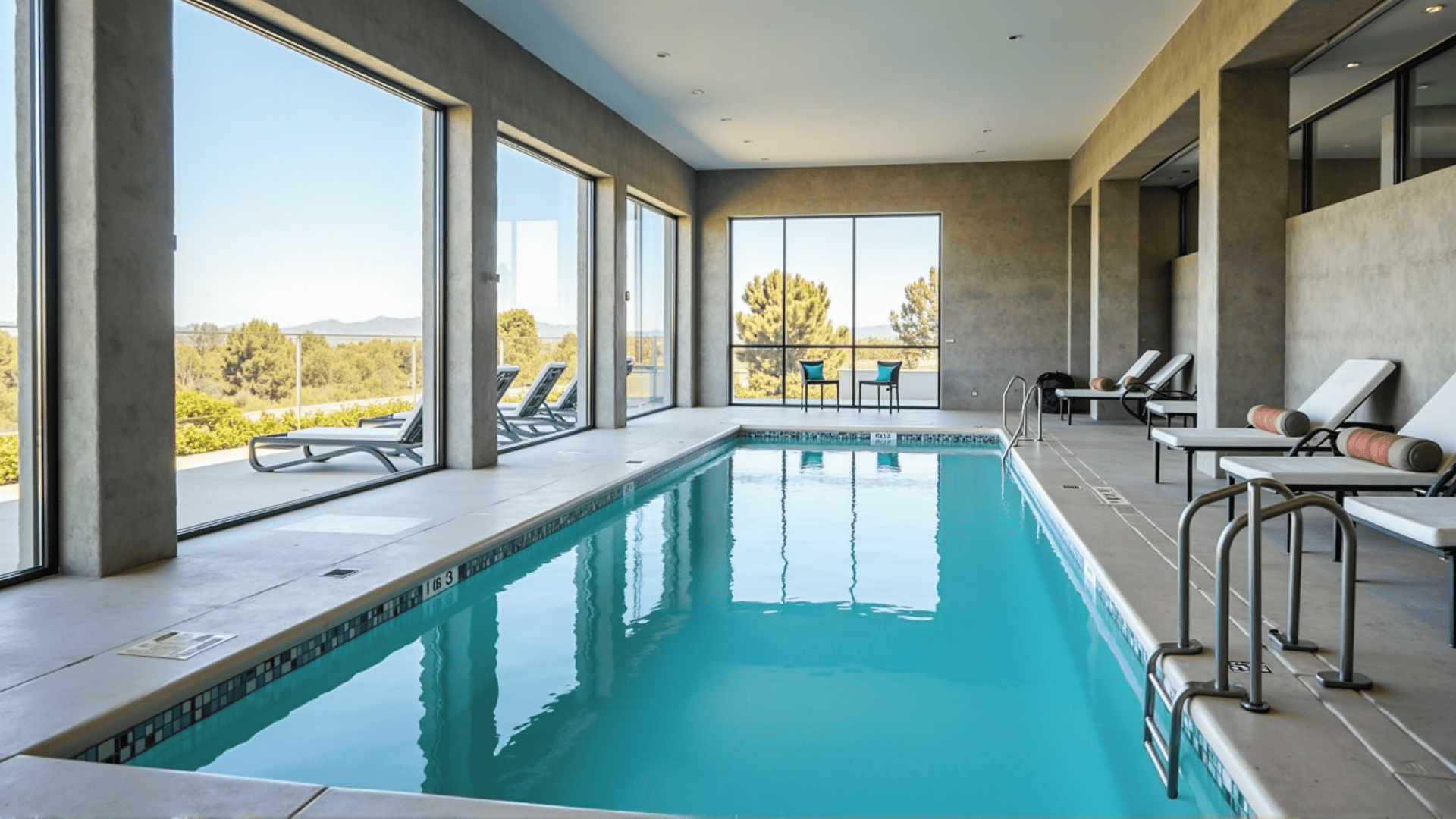
Pre-fabricated fiberglass shells remain one of my favorite recommendations for small spaces. Why? They arrive as a single, ready-to-install unit, dramatically reducing on-site construction time. Last summer, my team completed a fiberglass plunge pool installation in a tight urban backyard in just three days once the excavation was complete—a fraction of the time a concrete pool would have required.
The limitations? Fiberglass pools come in predetermined shapes and sizes, meaning they're less customizable than other options. However, manufacturers now offer increasingly diverse small-format designs specifically engineered for compact spaces, including models with built-in seating, tanning ledges, and even swim jets for exercise.
Vinyl Liner: Budget-Friendly Versatility
Vinyl liner pools provide an excellent middle-ground solution for small spaces. With customizable panels forming the structure, they can accommodate unusual spaces or challenging configurations that might not work with pre-fabricated options.
I recently worked with a professional couple who wanted a small but uniquely shaped pool for their angular courtyard. A vinyl liner allowed us to create a custom 12'x16' design that perfectly fit their challenging space, all while keeping their project considerably under budget compared to concrete alternatives.
The modular nature of vinyl pools also means easier installation access—a critical consideration when working in tight urban spaces where getting concrete trucks in position can be nearly impossible.
Concrete/Gunite: Ultimate Customization
When absolute customization is required in a small space, concrete (gunite) remains unmatched. For properties with unusual configurations, elevation changes, or specific design requirements, concrete allows us to create truly bespoke solutions.
A few years ago, I worked with a couple who had just eight feet of width between their detached garage and property line. Using concrete, we created a stunning 8'x16' lap pool with an integrated spa that perfectly utilized this challenging space—something impossible with pre-manufactured options.
The tradeoffs? Concrete pools take significantly longer to build (typically 8-12 weeks for even small formats), create more on-site disruption, and generally cost more than other materials. But for some spaces, they're simply the only viable option.
Alternative Small Pool Solutions

For truly challenging spaces, don't overlook creative alternatives:
- Stock tank pools: These galvanized metal containers offer an affordable entry point for very small spaces, though they lack the durability and features of traditional pools.
- Container pools: Repurposed shipping containers can be transformed into sleek, modern pools that work well in urban settings with linear constraints.
- Semi-inground options: For sloped yards or difficult terrain, partially above-ground installations can reduce excavation requirements while providing the functionality of a traditional pool.
Large Format Pools: Materials Built for Scale and Longevity
When space allows for a grander vision, material selection shifts toward durability, structural integrity, and creating a cohesive aesthetic across a larger canvas.
Concrete/Gunite: The Gold Standard
Concrete remains the predominant choice for custom large-format pools, and for good reason. The ability to create any imaginable shape at any scale makes it ideal for expansive designs. More importantly, concrete provides the structural integrity necessary for larger water volumes and multiple depth zones.
I recently completed a 20'x40' freeform pool for a family with complex elevation changes in their backyard. Using shotcrete (pneumatically applied concrete), we integrated multiple depth zones, a vanishing edge, and a separate spa—all flowing as a unified design that responded perfectly to the terrain. This level of customization is simply impossible with pre-fabricated materials.
The downside? Concrete pools have the longest construction timeline and typically the highest initial cost. However, their durability and adaptability often make them the wisest long-term investment for larger installations.
Fiberglass: Size Limitations
While fiberglass excels in smaller formats, it faces inherent limitations in larger installations. Manufacturing and transportation constraints typically cap fiberglass pools at around 16'x40', and even these larger shells can present significant logistical challenges during delivery.
That said, for homeowners seeking a quicker installation timeline for a medium-large pool (say, 14'x28' to 16'x32'), fiberglass can be an excellent option. I recently installed a 16'x35' fiberglass pool for a family in just eight days from start to finish—something that would have taken 10-12 weeks with concrete.
Vinyl Liner: Large Format Economics
Vinyl liner construction remains the most economical choice for large format pools, offering significant upfront savings compared to concrete. Modern vinyl materials have improved dramatically in durability and aesthetic options, with some premium liners now lasting 12-15 years before requiring replacement.
For budget-conscious clients wanting substantial swimming space, vinyl liners offer an excellent value proposition. Last year, I built a 18'x36' vinyl liner pool for approximately 40% less than an equivalent concrete version would have cost. The tradeoff? Less design flexibility and eventual liner replacement costs.
Making the Right Material Choice
When advising clients on materials, I always emphasize that there's no universally "best" choice—only the right choice for your specific situation. Consider these key factors:
- Budget reality: Be honest about both your initial budget and your willingness to invest in long-term maintenance.
- Timeline considerations: How quickly do you need your pool completed? Concrete typically takes 8-12 weeks, fiberglass 1-3 weeks, and vinyl 3-5 weeks.
- Design flexibility needs: How important is customization to your vision?
- Space constraints: Tight access points may limit equipment and material options.
- Long-term plans: How long do you plan to stay in your home? This affects the value of durability versus initial cost.
Remember that your choice of pool material isn't just about aesthetics—it fundamentally shapes your construction experience, ongoing maintenance requirements, and the long-term enjoyment of your investment. By understanding the strengths and limitations of each option, you can make an informed decision that aligns perfectly with your unique backyard vision.
Whether you choose a sleek fiberglass plunge pool for your urban oasis or a sprawling concrete masterpiece for your suburban retreat, the right material selection ensures your pool will bring years of enjoyment while complementing your home and lifestyle.
Landscaping & Integration: Creating Harmony Between Your Pool and Backyard

After designing and building hundreds of pools over my year career, I've found that the true magic of a successful pool project isn't just in the water feature itself—it's how seamlessly that pool integrates with the surrounding landscape. Whether you're installing a compact plunge pool or an expansive swimming oasis, thoughtful landscaping transforms a simple water feature into a cohesive outdoor living environment.
Small Backyard Pools: Maximizing Vertical Elements
When working with limited space, the vertical dimension becomes your greatest ally. I recall a project for a professional couple with a tiny urban backyard. Their lot was barely 600 square feet, but they dreamed of a resort-like feel. By incorporating staggered heights of ornamental grasses, climbing vines on custom trellises, and a stunning living wall adjacent to their 10'x16' plunge pool, we created a lush, intimate oasis that felt twice the size.
Strategic plant selection is crucial in compact spaces. Low-maintenance evergreens provide year-round structure without shedding into the pool, while ornamental grasses offer movement and texture without demanding excessive water or care. For one physician client with minimal maintenance time, we designed a striking arrangement of sculptural succulents and architectural plants around his small pool, creating a modern, low-maintenance retreat that required watering just once weekly.
Reflective materials are another secret weapon in small spaces. Last summer, we installed a dark blue interior finish in a 12'x16' cocktail pool, which dramatically reflected the surrounding landscaping and evening lighting. The homeowners were astonished at how this simple choice made their modest pool appear to double in size while creating a stunning mirror effect of their carefully selected plantings.
Multi-functional Elements for Small Spaces
In compact yards, every element must earn its place by serving multiple purposes. One of my favorite recent designs incorporated a raised bond beam that functioned as:
- A dramatic water feature with cascading spillways
- A convenient seating wall for poolside conversations
- Clever concealment for essential pool equipment
This approach to multi-functionality extends to decking as well. For a family with limited space, we designed a tiered deck system where the upper level served as dining space, while the lower level transitioned seamlessly to the pool edge, creating the illusion of a much larger backyard.
Large Format Pools: Creating Distinct Outdoor Living Zones
With generous space comes the opportunity to design a comprehensive outdoor living experience with multiple distinct zones. A recent 20'x40' pool project for a family who frequently entertains allowed us to create separate areas for dining, lounging, cooking, and play—all unified by consistent materials and thoughtful sight lines.
The extensive perimeter of larger pools provides ample opportunity for dramatic landscaping statements. For one client with a passion for horticulture, we designed a series of garden vignettes around their large pool, each with a different seasonal peak bloom time, ensuring year-round visual interest from any vantage point in the water.
Natural stone features truly shine in larger pool settings. Last year, we incorporated massive weathered boulders sourced from a local quarry into a 16'x32' pool design. These became dramatic diving rocks, waterfall features, and visual anchors that made the new installation appear as though it had always been part of the landscape—a testament to thoughtful integration.
Strategic Sun/Shade Planning
With larger pool areas, careful consideration of sun patterns throughout the day becomes essential. I always map the sun's path across my clients' properties to ensure we're creating appropriate balance between sun and shade areas.
For a family with young children, we positioned their large pool to receive morning sun for comfortable swimming after breakfast, while strategically placing mature trees and a custom pergola to provide afternoon shade when UV exposure is most intense. This thoughtful planning extended their comfortable swimming hours and reduced their reliance on sunscreen.
Proper Lighting Transforms Any Size Pool
Regardless of pool size, lighting is the element that transforms your aquatic space from day to night. For small pools, just 2-3 well-placed LED lights can create a dramatic jewel-box effect after sunset. In larger pools, zoned lighting can highlight architectural features while ensuring safety around the perimeter.
I'll never forget a client's reaction when we first demonstrated their new pool's lighting program. As the sun set and the carefully planned lights activated in sequence—first the subtle path lights, then the underwater LEDs, followed by the gentle uplighting on specimen plants—she actually teared up at the transformation of her backyard. "It's like having two completely different pools," she said, "one for day and one for night."
Finding the Perfect Balance
Whether you're working with a compact urban lot or a sprawling suburban property, the key to successful pool integration is finding the right balance between water, hardscape, and living elements. For most properties, the pool itself should occupy no more than one-third of the available space, allowing room for circulation, seating, and those crucial green elements that soften the necessary hardscape.
By thinking of your pool project as a holistic outdoor living environment rather than simply a water feature, you'll create a space that enhances your lifestyle and provides years of enjoyment, regardless of its size. The most successful pools—whether large or small—are those that feel like a natural extension of both your home and the surrounding landscape.
Environmental Considerations: Small Backyard vs. Large Format Pools

After two decades designing and installing custom pools, I've watched the swimming pool industry undergo a remarkable transformation. Today's homeowners aren't just asking about aesthetics and costs—they're increasingly concerned about the environmental impact of their backyard oasis. This shift reflects a broader awareness that our choices, even recreational ones, have ecological consequences worth considering.
The Water Equation: Consumption & Conservation
Small Backyard Pools: The Efficient Option
One of the most striking advantages of small backyard pools is their significantly reduced water footprint. A typical plunge pool or cocktail pool (around 10'x16') holds approximately 7,500-10,000 gallons—substantially less than the 20,000+ gallons required for a standard 16'x32' pool.
This water savings extends beyond the initial fill. Last summer, I worked with an environmental engineer who meticulously tracked water usage for his new 12'x24' pool. He discovered that evaporation—the primary source of water loss—was roughly 40% less than his neighbor's larger 18'x36' pool, simply due to the smaller surface area exposed to the sun.
The math is straightforward: less surface area equals less evaporation. In drought-prone regions where water restrictions are increasingly common, this difference can mean maintaining a swimmable pool while larger pools face mandatory draining or restrictions.
Large Format Pools: Higher Consumption Challenges
Larger pools inherently require more water—both initially and over time. A standard 16'x32' pool needs approximately 20,000-30,000 gallons for the initial fill, with annual evaporative losses potentially reaching 12,000 gallons in hot, dry climates.
I've had clients with large format pools express surprise at their water bills during summer months, not realizing that weekly "topping off" due to evaporation and splash-out can add thousands of gallons over a season. For reference, the average American household uses approximately 300 gallons daily for all purposes—a large pool's evaporation can easily surpass that figure during peak summer days.
Energy Requirements: Heating & Circulation
Small Pools: Lower Energy Demands
The energy efficiency of small pools is one of their most compelling environmental advantages. With significantly less water volume to heat and circulate, their energy requirements are proportionally lower.
I recently completed a project for a couple who installed a 10'x20' plunge pool with an efficient heat pump system. Their pool reaches comfortable swimming temperatures in just 2-3 hours, compared to the 12+ hours required for their previous larger pool. This translates directly to lower energy consumption and reduced utility bills.
Variable-speed pumps—which I now recommend for all installations—are particularly effective with smaller pools. These pumps can operate at lower speeds for longer periods, maximizing filtration while minimizing energy usage. For a small pool, this often means running at just 1,200-1,500 RPM versus the 3,450 RPM required by traditional single-speed pumps, resulting in energy savings of up to 80%.
Large Pools: Substantial Power Needs
The physics of heating and circulating large volumes of water create significant energy demands for larger pools. A 20'x40' pool typically requires a circulation pump at least twice as powerful as that needed for a small pool, drawing substantially more electricity for the same operational time.
Heating costs represent the most dramatic energy difference between pool sizes. I recall a client who converted from a large 18'x36' pool to a 12'x20' plunge pool specifically because their heating bills were approaching $400 monthly. Their new, smaller pool requires approximately one-third the energy to maintain the same temperature—a substantial environmental and financial benefit.
Chemical Usage & Water Quality
Small Pools: Reduced Chemical Requirements
The water chemistry management of smaller pools is inherently more efficient. With less water volume, chemical treatments require smaller quantities to achieve the same sanitizing effect. This not only reduces the environmental impact of chemical manufacturing and transport but also minimizes the chemicals eventually returned to the water system through backwashing and draining.
A professional pool service client of mine who manages dozens of properties reports using approximately 40-60% less chlorine and pH adjusters for small pools compared to large ones. This reduced chemical load is better for the environment and gentler on swimmers' skin, hair, and swimwear.
Large Pools: Greater Chemical Demands
Large format pools require proportionally more chemicals to maintain water quality. More water means more sanitizers, algaecides, pH adjusters, and clarifiers. These chemicals, while necessary for safe swimming, do have environmental implications both in their production and eventual disposal.
The larger water volume also makes large pools more susceptible to chemical imbalances, often requiring more frequent testing and treatment adjustments. This can lead to overtreatment if not carefully monitored, increasing the environmental footprint unnecessarily.
Sustainable Pool Ownership: Smart Choices for Any Size
Regardless of which pool size you choose, implementing environmentally conscious practices can significantly reduce your pool's impact:
Pool Covers: An absolute must for environmental responsibility. A quality cover reduces evaporation by up to 95%, minimizes heat loss, and reduces chemical demands—benefiting pools of any size.
Solar Heating: Particularly efficient for smaller pools, solar heating systems harness renewable energy and can provide sufficient warmth without fossil fuels, especially when paired with a cover to retain heat overnight.
Variable-Speed Pumps: These energy-efficient marvels adjust their output based on your pool's needs, dramatically reducing electricity consumption for both large and small pools.
Saltwater Systems: Generate chlorine naturally from salt, reducing the need for manufactured chemical transport and handling while providing consistent sanitation.
Making the Environmentally Conscious Choice
When clients ask me about the most environmentally responsible pool option, my answer is nuanced but clear: a thoughtfully designed small pool with modern efficiency features represents the lowest environmental impact while still delivering the joys of pool ownership.
However, if your heart is set on a large format pool, incorporating energy-efficient equipment, consistent use of pool covers, and responsible water management can significantly mitigate the environmental impact. The key is making informed choices at every stage of pool design, construction, and maintenance.
The most sustainable pool is ultimately one that meets your specific needs without excess—whether that's a compact plunge pool for occasional cooling off or a medium-sized pool that comfortably accommodates your family's activities without unnecessary surplus volume.
As we face increasing environmental challenges, responsible pool ownership means balancing our desire for backyard recreation with thoughtful conservation of our precious water and energy resources. The good news is that today's pool technology makes this balance more achievable than ever before.
Lifestyle Alignment & Considerations: Finding Your Perfect Pool Match

After designing and building custom pools for over two decades, I've come to recognize that the most successful pool projects aren't simply about aesthetics or technical specifications—they're about lifestyle alignment. Your pool should enhance the way you live, not complicate it.
Small Backyard Pools: Perfect For...
Empty-Nesters & Couples
Small pools have become increasingly popular among empty-nesters and professional couples. Last year, I designed a 12'x16' cocktail pool with a tanning ledge for a couple in their 50s whose children had recently left for college. They wanted a sophisticated space for relaxation rather than a recreation center. Their compact pool, surrounded by elegant landscaping and comfortable seating, has become their daily retreat—a place to unwind with a glass of wine while watching the sunset.
Urban Dwellers with Limited Space
For those with urban properties or smaller yards, compact pools offer the luxury of water without sacrificing valuable outdoor living space. I recently completed a 10'x18' pool for a family in a historic neighborhood with just 600 square feet of usable backyard. The pool, integrated with a small deck and vertical garden wall, transformed what would have been an underutilized patch of lawn into their favorite gathering spot.
Relaxation Seekers
If your primary pool purpose is cooling off and relaxation rather than vigorous activity, small pools excel. They heat more quickly, maintain temperature more consistently, and create an intimate atmosphere perfect for unwinding after a long workday.
Low-Maintenance Lifestyle
For busy professionals with demanding careers, the reduced maintenance burden of a small pool is a significant advantage. As one executive client told me after switching from a large to a small pool: "I used to spend my weekends maintaining my pool. Now I actually enjoy it."
Large Format Pools: Ideal For
Active Families with Children
Families with multiple children—especially teenagers—often benefit from larger pool formats that accommodate simultaneous activities. A recent 18'x36' pool I designed for a family with three active teenagers includes a deep end for diving, a basketball hoop at one end, and still leaves room for adults to swim laps or relax along the sides.
Frequent Entertainers
If your social calendar regularly includes pool parties and large gatherings, a larger format pool provides the necessary space for comfortable entertaining. I designed a 20'x40' pool for a couple known for their summer soirees, with multiple entry points, varied depth zones, and ample deck space for their typical 30+ guests.
Swimming Enthusiasts
For serious swimmers seeking daily exercise, length matters. While swim jets can make smaller pools functional for resistance training, many clients who swim for fitness prefer the uninterrupted length of a larger pool. One physician I worked with swims half a mile every morning in his 16'x40' lap pool—a ritual he credits with maintaining his physical and mental health through a demanding career.
Multi-Generational Households
Families sharing a home across generations often benefit from larger pools with varied features—shallow areas for grandchildren, comfortable entry steps for older adults, and deeper sections for teenagers and adults. These pools become natural gathering places that bring the entire family together.
Practical Considerations for Your Decision
When guiding clients through this decision, I always emphasize considering not just your current lifestyle, but your five-year plan. Will children soon leave for college? Are grandchildren on the horizon? Is retirement approaching, potentially changing how you use your outdoor space?
Your regular routine matters tremendously. I once had a client insist on a large recreational pool, only to realize a year later that their actual usage pattern—mostly evening relaxation after work—would have been better served by a smaller, more easily heated spa-pool combination.
Climate also influences this decision significantly. In warmer regions where pools see year-round use, the investment in a larger format may make more sense. In areas with shorter swimming seasons, a smaller, more easily heated pool often maximizes usable days.
Another factor to consider is how your pool complements other outdoor activities. For families who enjoy a variety of backyard pastimes—barbecuing, gardening, yard games—sacrificing too much space to a large pool can actually diminish overall enjoyment of the property.
Finding Your Perfect Match
The most satisfied pool owners I've worked with are those who honestly assessed their true lifestyle needs rather than being swayed by idealized visions from social media or luxury magazines. The perfect pool isn't the largest or most elaborate—it's the one that seamlessly integrates with your life, enhancing your daily routine rather than demanding that you adapt to it.
Whether you choose an intimate plunge pool for quiet relaxation or an expansive recreation pool for active family fun, the key is alignment with your actual lifestyle—not just the one you imagine during the planning process.
After all, a pool should be a source of joy, not obligation—a backyard retreat that serves your unique needs and preferences for years to come.
Making the Right Choice
After 48 years of designing and building pools for homeowners across the country, we at Designer Custom Pools have learned that the most important element of a successful pool project isn't the size—it's the perfect alignment between your space, your lifestyle, and your vision.
Whether you choose a sleek small backyard pool that maximizes your limited urban space or an expansive large format pool for family gatherings and entertaining, the key is working with experts who understand how to create an aquatic retreat that truly enhances your daily life.
Remember that the perfect pool isn't measured in square footage—it's measured by the joy it brings to your home. Small pools offer efficiency, lower maintenance, and surprising versatility, while large format pools provide endless possibilities for recreation and entertainment.
As you consider your options, we encourage you to reach out to our team for a personalized consultation. With nearly five decades of experience transforming backyards of every size into stunning outdoor retreats, we understand the nuances of creating the perfect pool for your unique property.
Don't let space limitations or uncertainty hold you back from creating your dream backyard oasis. Contact Designer Custom Pools today at (310) 261-2440 or visit our contact page to schedule your complimentary design consultation. Your perfect pool awaits—regardless of your backyard dimensions.